Search Results
Search this site
179 results found with an empty search
- Website - Mock-up Check List
Check list for your mock-up website: 1. Published a two pages website with the name of your artists prominently feature 2. You have links to social media – Instagram, TikTok etc 3. You have a tool bar/button with links to either Biography or Tour Diary 4. You five original images 5. You have 200 words of text - either your Tour Diary or Biography 6. You have 45 seconds “In the Studio” Example Bio Etienne is a producer and DJ born and raised in the sun-drenched city of Nice, France. His musical identity was forged in the heart of the Côte d’Azur, where the rhythmic pulse of European club culture and the elegance of Riviera nightlife first captured his imagination. His sound serves as a dedicated tribute to the classic "French Touch" energy, meticulously blending French filter disco and deep house with the high-octane power of modern festival EDM. Since signing with XL Recordings, his journey has taken him from local underground spots to the world's most iconic stages. He has spent the last year touring the European festival circuit, including a career-defining performance at Tomorrowland. For Etienne, the work is about more than just the beat; it is about bridging the gap between nostalgic disco-inspired samples and a fresh, global dance music sound. Whether he is in the studio crafting uplifting synths or performing a high-energy live set, his mission remains constant: taking European EDM to the international mainstream. His artistic world is defined by a unique retro-futuristic aesthetic and Mediterranean heat Example Tour Diary Entry 1: Sunsets in Nice There is nothing quite like the energy of the Côte d’Azur as the sun begins to set over the Mediterranean. Tonight’s hometown set in Nice felt like a return to where my musical identity was forged. I’ve always wanted my sound to reflect that specific Riviera nightlife—that blend of French filter disco and deep house that just feels like summer. Playing for the local crowd, I could see so many "Explorers" in the audience, people who are constantly seeking new experiences and aren’t afraid of a creative challenge. This city gave me the "French Touch" roots I carry with me to every international stage, and tonight reminded me why I started this journey. We’re just getting started on our mission of taking European EDM to the international mainstream. Entry 2: Tomorrowland Mainstage I’m still coming down from the high of the Tomorrowland mainstage. Looking out at a sea of thousands of people during the peak of my set, I felt the true power of modern festival EDM. I debuted a new track featuring some uplifting synths and retro-futuristic layers that really hit the 80s mise-en-scene vibe we’ve been working on in the studio. The crowd's energy when the beat dropped was pure neon chaos. It was incredible to see how well the sci-fi narrative of my new music video translated to a live setting. This performance was a major milestone for me as an artist on XL Recordings, proving that our specific brand of European club culture has a massive global appeal. Entry 3: Back in the Studio with XL After weeks on the festival circuit, I’m back in the studio in London with the XL Recordings team, the same legendary label that has supported icons like The Temper Trap and The Avalanches. We are currently reviewing the original AV material for the website and making sure the branding and convergence between my live sets and my digital presence is seamless. I’ve been experimenting with disco-inspired samples to ensure the next record stays true to that French Touch energy while maintaining high production values for the mainstream. I can’t wait to show you what we’ve been working on—check out the "In the Studio" page for some exclusive behind-the-scenes shots of the new gear and the neon aesthetic we’re building for the next tour
- Previous Questions - Component Two
2024 Questions Section A (Television): Explore how the set episode of Peaky Blinders reinforces or challenges genre conventions. Explain how social and cultural contexts influence audience interpretations of television products. Refer to the set episode of The Bridge in your response. Section B (Magazines): How useful are feminist theories for analysing the representations in the set editions of Vogue and The Big Issue? Refer to at least one of the following theories in your response: van Zoonen's feminist theory or bell hooks' feminist theory. Section C (Online): To what extent has the internet challenged the power and dominance of large media organisations? Refer to Zoe Sugg and the Attitude website in your response. 2023 Questions Section A (Television): How useful are structuralist theories for exploring television products? Refer to Lévi-Strauss’s structuralist theory of binary oppositions and the set episodes of Peaky Blinders and The Bridge in your response. Section B (Magazines): To what extent can audiences interpret the same magazine in different ways? Explore the set editions of Vogue and The Big Issue in your response. Section C (Online): Explain how media production and distribution have changed in the age of YouTube and the Internet. Refer to Zoe Sugg in your response. Discuss the influence of social and cultural contexts on the representations on the Attitude website. 2022 Questions Section A (Television): Explain Henry Jenkins’ theory of fandom. Refer to Peaky Blinders to support your response. Explore how representations in the set episode of The Bridge may position audiences. Section B (Magazines): Evaluate the strengths and weaknesses of semiotic approaches to magazine analysis. Refer to Roland Barthes’ theory of semiotics and the set editions of Vogue and The Big Issue in your response. Section C (Online): How much influence do economic factors have on online media products? Refer to Zoella/Zoe Sugg and the Attitude website in your response. 2021 Questions Section A (Television): Steve Neale argues that genres may be dominated by repetition, but they are also marked by difference, variation and change. Evaluate this theory of genre. Use the set episodes of Peaky Blinders and The Bridge to support your answer. Section B (Magazines): To what extent do social and cultural contexts influence audience interpretations of magazines? Refer to the set editions of Vogue and The Big Issue to support your answer. Section C (Online): Explain the impact of the internet and online platforms such as YouTube on media regulation. Refer to Zoe Sugg/Zoella in your response. Explore how the Attitude website challenges the misrepresentation of minority groups. 2020 Questions Section A (Television): ‘Television products are significantly influenced by the contexts in which they are produced.’ How evident is this in Peaky Blinders and The Bridge?. Section B (Magazines): Curran and Seaton argue that media industries are generally controlled by a small number of powerful companies whose main purpose is to create a profit. Evaluate this theory of power and media industries. Refer to Vogue and The Big Issue in your response. Section C (Online): Explain Judith Butler’s theory of gender performativity. Use Zoe Sugg/Zoella to support your response. Explore how the Attitude website targets and attracts a specialised audience. 2019 Questions Section A (Television): ‘Television is a global industry.’ To what extent do Peaky Blinders and The Bridge support this claim?. Section B (Magazines): Discuss the influence of historical context on representations in the set edition of Vogue magazine. Explore how the set edition of The Big Issue conveys viewpoints and ideologies. Section C (Online): Clay Shirky argues that audiences in today’s online age are no longer passive consumers of media content. Evaluate this ‘end of audience’ theory. Refer to Zoe Sugg and the Attitude website to support your answe
- Deep Dive - The Bridge
2026 Prediction: Evaluate the usefulness of Todorov's narratology in understanding the appeal of contemporary television crime drama. Refer to the set episodes of Peaky Blinders and The Bridge in your response. (30 Marks) 2024: Explain how social and cultural contexts influence audience interpretations of television products. Refer to the set episode of The Bridge in your response. (15 Marks) 2023: How useful are structuralist theories for exploring television products? Refer to Lévi-Strauss’s structuralist theory of binary oppositions and the set episodes of Peaky Blinders and The Bridge in your response. (30 Marks) 2022: Explore how representations in the set episode of The Bridge may position audiences. (15 Marks) 2021: Steve Neale argues that genres may be dominated by repetition, but they are also marked by difference, variation and change. Evaluate this theory of genre. Use the set episodes of Peaky Blinders and The Bridge to support your answer. (30 Marks) 2020: ‘Television products are significantly influenced by the contexts in which they are produced.’ How evident is this in Peaky Blinders and The Bridge? (30 Marks) 2019: ‘Television is a global industry.’ To what extent do Peaky Blinders and The Bridge support this claim? (30 Marks) Point The Bridge utilizes the specific media language of the Nordic Noir sub-genre to establish a dark and melancholic tone that differs from traditional crime dramas. Evidence The series employs a desaturated color palette, low-key chiaroscuro lighting, and a bleak aesthetic featuring shadows that establish mystery and enigma. Theory This aligns with Steve Neale’s genre theory, which asserts that while genres rely on repetition, they must also incorporate "difference, variation, and change" to remain appealing. Analysis The aesthetic creates a sense of isolation and alienation, specifically using the vast Nordic landscape and the iconic Oresund Bridge to connote an "other-worldly" setting that is neither one place nor another. Cultural Context By borrowing conventions from film noir—such as a dark tone and moral ambiguity—the producers established a distinct brand that could be successfully marketed to a global audience. Point Technical codes in the series are strategically designed to involve the audience as active participants in the investigative process. Evidence Tracking shots are used to introduce powerful female characters like Saga and Hanne, while shots filmed through windows or behind obstacles position the audience as "outsiders" looking in. Theory This utilizes Roland Barthes’ enigma codes, where information is withheld and the audience is challenged to solve the crime alongside the detectives. Analysis The use of intense close-ups and profiles in silhouette helps construct Saga’s enigmatic character and advances relationships without the need for extensive dialogue. Cultural Context High production values, made possible by Creative Europe Media funding, allowed for a high-quality feel that enhanced the show's appeal for global distribution. Point The character of Saga Norén subverts traditional female representations in the crime genre by adopting characteristics typically associated with masculinity. Evidence Saga's identity is constructed through a masculine stance, walk, and clothing—including leather trousers and a military overcoat—and she is shown to be unconcerned with social norms, such as changing her t-shirt in the middle of the office. Theory This can be explored through Judith Butler’s theory of gender performativity, which suggests that identity is performatively constructed through expressions of gender. Analysis By "paring back" her character to the minimum in terms of clothing and dialogue, the show explores a hardcore investigator who is "socially challenged," representing an often-underrepresented social group. Cultural Context Saga’s construction reflects a contemporary cultural interest in fluid gender identities and challenges the typical "social norms" of how a female heroine should behave. Point The Bridge constructs a feminist discourse by placing women in central, non-sexualized roles that challenge patriarchal values. Evidence Women like Saga, Hanne, and Lillian (the Police Commissioner) are active and central to the narrative, while men are often placed in domestic roles, such as Henrik who is shown cooking and cleaning. Theory This challenges bell hooks’ concept of the "ideology of domination," as the female characters are not marginalized and drive the narrative forward. Analysis The show subverts the "male gaze"; for instance, when Saga undresses, the camera focuses on the intra-diegetic bewilderment of her colleagues rather than objectifying her for the audience. Cultural Context The narrative specifically addresses gender identity and LGBTQ issues, such as the murder of a gender campaigner, reflecting shifts in contemporary social and cultural attitudes. Point As an international co-production, The Bridge demonstrates a strategic industrial model designed to share costs and reach multiple national audiences. Evidence The series was a co-production between Filmlance (Sweden) and Nimbus Film (Denmark), broadcast on public service channels SVT1 and DR1, and later released on Netflix in countries like Canada and Germany. Theory This aligns with David Hesmondhalgh’s theory, as the use of a successful format was maximized through remakes in the US and UK/France to minimize financial risk. Analysis Being produced by two companies allowed for easier access to locations in both countries, though it created logistical challenges regarding which national employment and regulation laws to follow. Economic Context The creation of the Nordic Noir brand reduced economic risk by building a loyal, global fanbase for subtitled "foreign language" programs that were previously considered niche. Point The series targets a niche, intellectually curious audience by utilizing the established brand identity of public service broadcasters. Evidence In the UK, it was broadcast on BBC Four at 9pm on a Saturday, a peak slot dedicated to high-quality, culturally enriching foreign language drama. Theory According to Stuart Hall’s reception theory, a "preferred reading" would see feminist audiences feel empowered by the strong female representations and the narrative's focus on gender issues. Analysis The program offers "uses and gratifications" pleasures through the intellectual challenge of its complex, "flexi-narrative" and the escapism provided by a different culture. Social Context Because the channels involved are license fee-funded, they are not under pressure from advertisers and can afford to take more risks with "gruesome" content or niche subject matter. Genre: To which specific sub-genre of crime drama does The Bridge belong, and what are two of its typical visual conventions? Industry: Name the two production companies involved in this Swedish/Danish co-production. Narrative: What is a "flexi-narrative", and how is it used in The Bridge to engage the audience? Representation: How does Saga Norén's clothing and physical "stance" challenge traditional representations of women in media? Media Language: What is "chiaroscuro lighting", and what specific mood does it help create in the series? Regulation: Why did the BBC choose to broadcast The Bridge at 9pm, and which organization regulates this in the UK? Theory: How does the character of Henrik (who is shown cooking and cleaning) support a feminist analysis of the show? Audience: According to Stuart Hall, why might a "conservative audience" have an "oppositional reading" to the show’s themes? Glossary of Key Terms for The Bridge Binary Opposition: Contrast between opposite concepts used to drive the narrative, such as Sweden vs. Denmark or Police vs. Criminal. Chiaroscuro Lighting: A technical code using strong contrasts between light and dark to create shadows and enigma. Cliff-hanger: A narrative device used at the end of an episode (like the explosion in S3 E1) to ensure audience return. Co-production: A business arrangement where companies from different countries (like Filmlance and Nimbus) work together to share costs and audiences. Desaturated Color Palette: An editing technique that makes colors look muted or grey, contributing to a melancholic tone. Flexi-narrative: A complex story structure where multiple storylines interweave and characters are morally complex. Gender Performativity: Judith Butler's theory that gender is not an internal essence but is constructed through actions and behavior. Intra-diegetic Gaze: When characters within the story world look at each other, such as the detectives' bewildered gaze at Saga when she undresses. Nordic Noir: A sub-genre of crime fiction characterized by its dark tone, realistic social themes, and bleak landscapes. Oresund Bridge: The physical bridge connecting Sweden and Denmark, used as a metaphor for collaboration and a recurring iconic setting. Public Service Broadcaster (PSB): A media organization (like the BBC, SVT, or DR) funded by the public to provide culturally significant content. Repertoire of Elements: The set of conventions and expectations that allow an audience to recognize a specific genre. Subtitled Drama: Programs in a foreign language that use text on screen, often considered "niche" but successfully marketed through the Nordic Noir brand. Tracking Shot: A camera movement that follows a character to involve the audience in their actions or investigation. Watershed: In the UK, the 9pm cut-off point before which content unsuitable for children (like the "gruesome" scenes in The Bridge) cannot be shown.
- Component 2 - A-level Predictions
Section A: Television in the Global Age Case Studies: Peaky Blinders and The Bridge Prediction: Narratology (Todorov) or Postmodernism (Baudrillard). Rationale: While Genre (Neale) and Structuralism (Lévi-Strauss) appeared in 2021 and 2023 respectively, Todorov’s narratology has not been the primary focus of a 30-mark question in this section recently. Additionally, Postmodernism is a core theory for the "Global Age" that hasn't been tested in depth. Theoretical Question (30 Marks): "Evaluate the usefulness of Todorov's narratology in understanding the appeal of contemporary television crime drama. Refer to the set episodes of Peaky Blinders and The Bridge in your response." PETAC Sample Insight (Todorov):\ Point: Both Peaky Blinders and The Bridge utilize a complex "disequilibrium" to sustain narrative tension across a global series. Evidence: In The Bridge, the disequilibrium is triggered by the discovery of a body on the Øresund Bridge; in Peaky Blinders, it is the theft of the government arms. Theory: Todorov’s Narratology. Analysis: Unlike traditional procedural dramas that resolve in 60 minutes, these "Global Age" products use an extended period of imbalance to explore broader social issues, making the resolution (equilibrium) more ideologically significant. Context: This reflects the transnational nature of television where complex, long-form narratives are essential for international streaming success. Section B: Magazines – Mainstream and Alternative Media Case Studies: Vogue and The Big Issue Prediction: Cultural Industries (Hesmondhalgh) or Identity (Gauntlett). Rationale: A recent specification amendment added a requirement to study Cultural Industries (Hesmondhalgh) in this section, replacing the previous focus on regulation. This makes it a high-probability topic for 2026. Identity (Gauntlett) is also overdue as a primary focus. Theoretical Question (30 Marks): "Evaluate the extent to which magazines are shaped by the need to minimise risk and maximise audiences. Refer to the set editions of Vogue and The Big Issue in your response." PETAC Sample Insight (Hesmondhalgh): Point: Mainstream magazines like Vogue prioritize profit through high-production values and star appeal, while alternative media like The Big Issue prioritize social value. Evidence: Vogue relies heavily on high-end fashion advertising and "A-list" celebrity iconography; The Big Issue utilizes a street-vendor distribution model. Theory: Hesmondhalgh’s Cultural Industries. Analysis: Vogue minimizes risk by formatting its content through established genre codes (luxury fashion), whereas The Big Issue operates outside the commercial mainstream, taking more "adventurous" risks with political and social content. Context: This highlights the economic context of the UK magazine industry, where mainstream titles are part of massive conglomerates (Condé Nast) while alternative titles serve a social purpose. Section C: Media in the Online Age Case Studies: Zoella (Zoe Sugg) and Attitude Prediction: Fandom (Jenkins) or Postcolonialism (Gilroy) for Attitude. Rationale: Clay Shirky (End of Audience) was tested in 2019, and Industry/Power was the focus in 2024. Jenkins' Fandom theory is central to the "Online Age" but hasn't been a main 30-mark evaluation recently. Additionally, the spec emphasizes ethnicity and postcolonialism specifically for Attitude. Theoretical Question (30 Marks): "To what extent are online media products defined by the participation of their audiences? Refer to Zoe Sugg and the Attitude website in your response." PETAC Sample Insight (Jenkins): Point: Online platforms allow audiences to transition from passive consumers to active "fans" who participate in the circulation of meaning. Evidence: Zoe Sugg’s YouTube comments and social media interactions allow for direct audience engagement; Attitude provides a platform for specialized LGBTQ+ communities to share content and discuss issues. Theory: Jenkins’ Fandom Theory. Analysis: This "participatory culture" allows audiences to engage in "textual poaching," where they take elements of the creators' content (like Zoella’s lifestyle) and incorporate it into their own social identities. Context: This reflects the digitally convergent nature of contemporary media, where the boundaries between producer and consumer have collapsed.
- Tide - Deep Dive
Point The 1950s Tide print advert utilizes complex media language and a specific visual composition to establish the product as a "miracle" essential for the post-war domestic sphere. Evidence The layout follows a Z-line and a rough rule of thirds, featuring bright primary colors and a mix of sans-serif fonts for informal address alongside serif fonts for "technical" details like the "1, 2, 3" bullet points. Theory According to Roland Barthes’ semiotics, the advert creates suspense through the "enigma" of the headline "what women want" (Hermeneutic Code), while the hearts and the woman’s hugging gesture function as Semantic Codes connoting love. Analysis By combining informal comic-strip imagery with factual, high-copy sections, the producers ensure the audience receives both an emotional "hook" and the detailed information required for a then-new technology. Cultural Context This design reflects the post-WWII consumer boom, where rapid developments in home technologies like washing machines made detailed "how-to" advertising a necessity for 1950s consumers. Point The advert is constructed through binary oppositions to aggressively position Tide as the superior choice in a burgeoning market of domestic products. Evidence The copy explicitly states that "Tide gets clothes cleaner than any other washday product" and describes the product as being "unlike soap," which supposedly leaves a "soap film". Theory Applying Claude Lévi-Strauss’ structuralism, meaning is created through the conflict between Tide and its "inferior" commercial rivals. Analysis This use of hyperbole and superlatives (e.g., "World’s cleanest wash!") forces the audience to view the domestic task of laundry as a competitive endeavor where only Tide provides the "miracle" solution. Cultural Context As supermarkets became more popular in the 1950s, corporations shifted focus toward Unique Selling Points (USPs) to differentiate their brands from the vast array of new competitors. Point The representation of the female characters reinforces traditional 1950s gender stereotypes of domestic perfection and servitude. Evidence The main female character features a fashionable hairstyle (rolls and curls popularized by film stars like Rita Hayworth) and full makeup, despite being engaged in manual labor. Theory According to Stuart Hall’s representation theory, these images of domesticity form a "shared conceptual road map" that makes the world of the advert feel familiar and "natural" to the audience. Analysis The selection of the "housewife" character, who is shown "adoring" her laundry, encodes a preferred reading that a woman’s primary source of fulfillment should be found in her domestic chores. Cultural Context This representation was a deliberate move to push women back into the domestic sphere following the war years, where intertexts like "Rosie the Riveter" had previously challenged such stereotypes. Point The advert utilizes the concept of role models to encourage female audiences to construct their own identities around the brand. Evidence The woman in the main image is depicted as happy and focused, wearing a practical headband that links back to the dress codes of women working in factories during the war. Theory David Gauntlett’s theory of identity suggests that women in the 1950s may have used these "idealized" representations as a template for their own sense of self as a "modern" housewife. Analysis By representing the woman as someone who has found the "miracle" solution to her problems, the advert suggests that owning Tide is a key step toward achieving the "standard of living" expected in the post-war era. Cultural Context During this period, while men were targeted for the car industry, women were the primary market for home technologies, making their identity as "domestic managers" highly profitable for institutions like Procter & Gamble. Point From a feminist perspective, the advert reinforces Western ideologies of beauty and racial hierarchies prevalent in 1950s America. Evidence The advert exclusively represents "modern," white women with lighter skin tones, adhering to a very specific and narrow aesthetic. Theory bell hooks’ feminist theory can be applied here to argue that the advert suggests lighter-skinned women are more "desirable" and fit better into the dominant social hierarchy. Analysis This lack of diversity reinforces post-colonial power structures (Gilroy), suggesting that the "miracle" of modern consumerism and domestic ease is an experience reserved for a specific white, middle-class demographic. Cultural Context This occurred at a time when traditional colonial power was being challenged globally, yet media texts like this continued to cultivate a white-centric worldview. Point The Tide campaign was a strategic multi-platform industrial effort designed to cultivate long-term brand loyalty through repetition and authority. Evidence The DMB&B agency used print and radio campaigns concurrently and included an endorsement from Good Housekeeping magazine as an "Opinion Leader". Theory George Gerbner’s cultivation theory explains how the repetition of messages like "Tide's got what women want!" causes audiences to align their own ideologies with the brand over time. Analysis By using a direct mode of address (e.g., "Remember!") and personal pronouns ("your wash"), the advert builds a personal relationship with the consumer, making the brand feel like a trusted "friend". Cultural Context Procter & Gamble intentionally referred to their corporate name in the advert because market research showed consumers had high levels of confidence in the company during the 1950s. Ownership: Which massive company launched Tide in 1946, and which advertising agency handled their account during the 1950s? Media Language (Typography): What is the difference in connotation between the sans-serif font used in the headings and the serif font used for technical details? Theory (Semiotics): How does the advert use what Roland Barthes calls the "Hermeneutic Code" (enigma) in its main headline? Binary Oppositions: Give two examples of how the advert creates a conflict between Tide and traditional "soap." Intertextuality: Which two famous WWII recruitment adverts are mentioned as challenging the domestic stereotypes seen in this 1950s campaign? Representation (Dress Code): How does the woman's hairstyle link to the cultural context of 1950s Hollywood and wartime practicality? Audience (Opinion Leaders): Which specific magazine is used as an "Opinion Leader" to endorse Tide, and why is this effective? Cultivation Theory: According to George Gerbner, what is the result of the repetitive messaging used in the Tide campaign? Glossary of Key Terms Anchorage: The use of text (like "World's Cleanest Wash!") to fix the meaning of an image. Binary Opposition: A structuralist idea that meaning is created through opposites, such as Tide vs. Competitors. Copy: The written text in a print advertisement. Cultivation Theory: The idea that repetitive media messages shape an audience's perception of reality over time. Enigma Code: A "hook" or mystery used to grab the audience's attention. Hermeneutic Code: Barthes' term for an enigma or mystery within a text. Housewife Identity: The 1950s social construction of women as primary domestic caretakers. Hyperbole: Exaggerated language used for effect, such as calling a product a "miracle." Opinion Leader: A person or organization (like Good Housekeeping) that influences the targeted audience's decisions. Post-War Consumer Boom: The 1950s economic period marked by a surge in buying new household technologies. Preferred Reading: The intended message the producers want the audience to accept. Proairetic Code: Barthes' term for elements that build tension or indicate an action (like multiple exclamation marks). Semantic Code: Signs that carry a specific cultural meaning, like hearts signifying love. Shared Conceptual Road Map: Stuart Hall’s idea that we understand media because we share cultural "maps" of what things mean. Z-Line: A layout convention where the eye travels across a page in a "Z" shape, ending on the product or call to action.
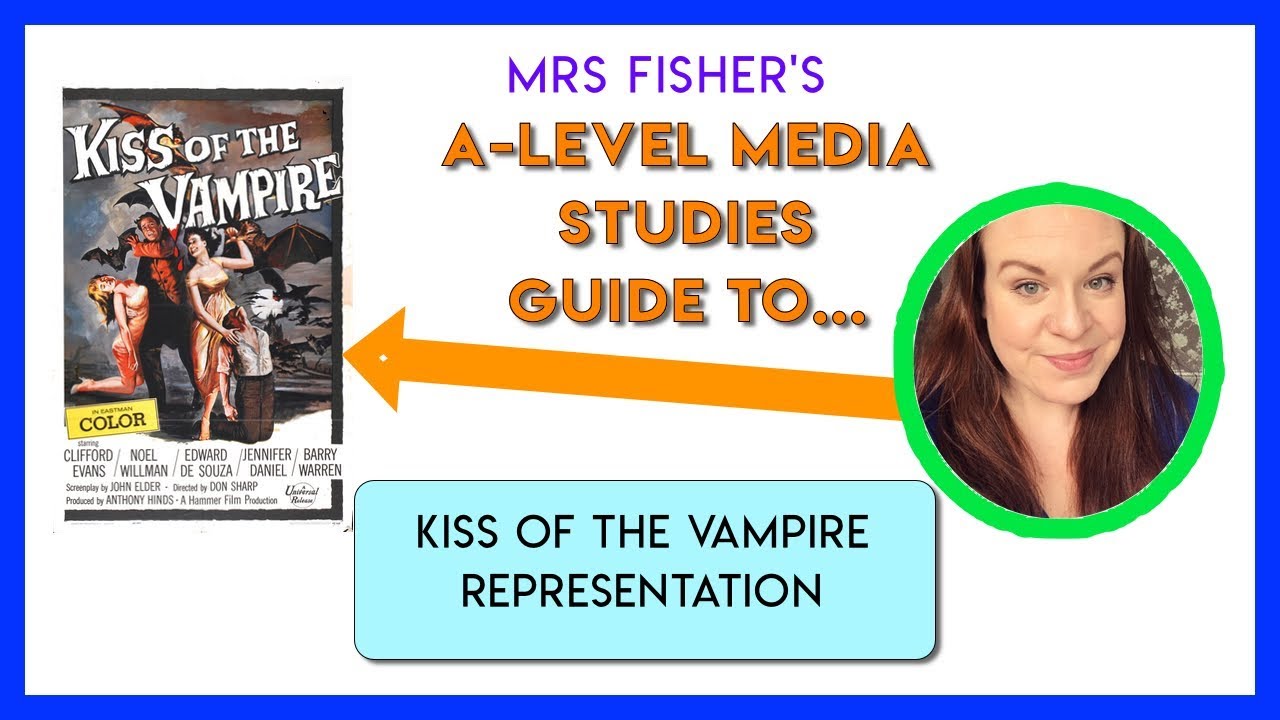
- Kiss of the Vampire - Deep Dive
Point Hammer Film Productions utilized specific media language in the Kiss of the Vampire poster to establish its genre identity while signaling a modern update for 1960s audiences. Evidence The poster features a "painted" main image, a capitalised serif font with "wooden" styling, and the explicit anchorage of the text "In Eastman Color". Theory This reflects the 1960s audience’s assumed familiarity with the codes and conventions of "monster movie" posters, such as specific compositions and fonts. Analysis While the hand-painted style and gloomy palette (grey, black, and brown) link to Hammer's successful franchises like Dracula, the mention of "Eastman Color" connotes that this is a "modern telling" of an older story. Cultural Context By 1963, Hammer had built a successful "monster movie" brand with franchises like Frankenstein and The Mummy, allowing them to leverage established audience expectations for the genre. Point The poster utilizes semiotic codes to create suspense and reinforce the dark, frightening nature of the vampire genre. Evidence Visual signifiers such as bats, a full moon, a castle, and blood dripping from the letter 'V' serve as key genre markers. Theory According to Roland Barthes’ semiotics, the "Hermeneutic Code" creates enigmas around the fate of the victims, while "Semantic Codes" apply to conventional images like the bats. Analysis The dripping blood functions as an iconic sign for a fang, and the title's reference to a "kiss" creates a tension between romance and monstrous horror. Cultural Context These elements form part of a "shared conceptual road map" (Stuart Hall) that allows the audience to immediately identify and decode the "world" of the horror film. Point Kiss of the Vampire uses binary oppositions to structure its narrative world and subvert traditional horror character roles. Evidence The poster contrasts "vampires" with "victims" and the romantic connotations of a "kiss" with the stereotypical "vampire" monster. Theory Applying Claude Lévi-Strauss’ structuralism, meaning is created through these opposing representations. Analysis By placing a male victim in a submissive, knees-on-the-ground pose while a female vampire attacks, the poster creates an opposition to the typical "damsel in distress" trope. Cultural Context This structural conflict reflects the changing social dynamics of the early 1960s, where traditional power structures were beginning to be questioned. Point The representation of women in the poster oscillates between "older" passive stereotypes and more modern, aggressive depictions reflecting the start of women’s sexual liberation. Evidence One woman is shown in a stereotypical "passive victim" pose, while another is depicted baring her teeth and raising her arm "fist-like" as she bites a male victim. Theory Liesbet Van Zoonen’s feminist theory suggests the female vampire contributes to social change by stepping into a "co-antagonist" role rather than just a victim. Analysis While the pale, light-material dresses reinforce femininity by highlighting curves, the aggressive gesture codes of the female vampire represent her in a non-stereotypically dominant way. Cultural Context This occurs during the "swinging sixties" and the introduction of the contraceptive pill (1960), a time when feminists were campaigning for equal pay and greater social equality. Point The poster’s portrayal of a dominant female vampire and a fearful male vampire encodes "male fears" of women challenging established social hierarchies. Evidence The lead male vampire is shown with his arm thrown across his body in a defensive gesture, appearing uncharacteristically fearful. Theory David Gauntlett’s theory of identity suggests that the female vampire could serve as a role model for women struggling against male oppression. Analysis The reversal of power—where the male victim has his throat exposed and the male vampire is in a defensive stance—suggests a world where traditional male control is under threat. Cultural Context This reflects a 1963 context where women were increasingly entering the paid workforce and equal pay legislation was being passed in America. Point The institutional context of the film's distribution and marketing highlights the competitive nature of the horror genre in the early 1960s. Evidence Produced by Hammer but distributed by J. Arthur Rank and Universal, the film was intended as a sequel to 1958’s Dracula but makes no reference to the character in the script. Theory This reflects the industry's need to distance the product from unfavourable comparisons to earlier versions, such as Christopher Lee's portrayal of Dracula. Analysis By listing the stars in order of fame and prioritizing highly paid male actors like Clifford Evans, the poster utilizes "star power" to ensure a successful "Universal Release". Cultural Context Against a backdrop of rapid change—such as "Beatlemania" and the Soviet Union launching the first woman into space—Hammer sought to maintain its dominance in the "monster movie" market. Ownership: Who produced the film Kiss of the Vampire, and which major company distributed it? Media Language: What connotations are created by the serif font used for the title? Genre Conventions: Name three visual signifiers used on the poster that are conventional to the horror/vampire genre. Semiotics: According to the sources, how is Barthes' Hermeneutic Code (enigma) applied to the poster? Social Context: What significant events of 1960 and 1963 relate to the theme of women’s sexual liberation and equality? Representation: How does the "gesture code" of the woman on the right of the poster challenge traditional gender stereotypes? Feminist Theory: According to Liesbet Van Zoonen, how does the female vampire differ from the stereotypical female victim? Structuralism: Identify one binary opposition used to construct the meaning of this film poster. Glossary of Key Terms for Kiss of the Vampire Anchorage: The use of text, such as "In Eastman Color," to fix the meaning of an image as "modern." Binary Opposition: A structuralist technique of contrasting opposites, such as vampire vs. victim. Codes and Conventions: The familiar "rules" of a genre, like the fonts and composition of monster movie posters. Eastman Color: A technical signifier used to connote that the film is a modern, high-quality production. Enigma: A mystery or "hook" used to create suspense about the narrative. Gesture Code: The way a character’s pose or movement communicates meaning, such as a defensive arm or a submissive exposed throat. Hammer Film Productions: The studio famous for its successful "monster movie" franchises in the 1950s and 60s. Hermeneutic Code: A semiotic code (Barthes) that creates mystery and suspense for the audience. Intertext: A media text that is referenced by or compared to another, such as The Evil of Frankenstein. Male Gaze: (Applied to context) The traditional representation of women as passive victims for a male audience. Monster Movie: A film genre focused on creatures like vampires, mummies, or Frankenstein's monster. Passive Victim: A stereotypical representation of a character (usually female) who is powerless against a monster. Role Model: A character that an audience member can identify with or aspire to be like. Semantic Code: A sign that carries a specific cultural meaning, like bats signifying horror. Serif Font: A font with "wooden" styling used here to connote the vampire's coffin or a wooden stake. Shared Conceptual Road Map: Stuart Hall’s idea that images (like castles and capes) have meanings that are understood by a whole culture
- Suggested Structure for the 45 = Second Reel
1. Hook (0–5 seconds) Open immediately with energy. Ideas: close-up of someone saying: “Wait, play that chorus again.” producer reacting: “That’s the take.” quick instrumental hook handheld shot entering the studio Media language focus: fast cuts handheld camera diegetic sound natural lighting 2. Establish the Studio Environment (5–15 seconds) Show: instruments mixing desk headphones laptop sessions tuning guitars discussing lyrics\ Use layered audio: snippets of the song chatter laughter count-ins Students should avoid over-scripted dialogue. Semi-improvised feels more authentic. Example dialogue: “The bridge still feels too slow.”“What if we strip the drums out there?”“That riff is the strongest bit.” 3. Creative Discussion / Conflict (15–30 seconds) This is the core narrative. Have the band: debate a lyric change tempo test a riff replay a vocal line disagree briefly then resolve it This creates: narrative development realism audience investment Shot ideas: over-the-shoulder at DAW screen close-up of fingers on guitar/piano reaction shots waveform on monitor producer nodding to beat 4. Payoff / Teaser (30–45 seconds) End with: strongest section of song montage synced to beat everyone vibing to playback text overlay: “New single coming soon” OR: “Should we release this?” Final shot: freeze frame studio lights off laughter dramatic bass drop Technical Expectations You Could Set Students should demonstrate: Camerawork handheld realism close-ups shallow depth of field if possible motivated camera movement Editing beat cuts J-cuts/L-cuts montage speed ramps (optional) captions/subtitles Sound layered diegetic audio music mixed under dialogue ambient studio sound Mise-en-scène authentic studio iconography instruments/cables/posters costume fitting genre identity Good Real-World Examples Billie Eilish & Finneas studio clips Great for: natural dialogue intimate camerawork authentic creativity Billie Eilish behind-the-scenes songwriting clip Gorillaz studio “momentz” Very useful for: casual handheld filming collaborative discussion layered sound Gorillaz behind-the-scenes recording footage Linkin Park “Inside the Studio” Useful for: discussing song structure producer/band interaction teaser marketing style Linkin Park Inside the Studio footage Rolling Stones vocal recording BTS Good for: performance authenticity candid studio atmosphere Rolling Stones studio footage example
- Anita and Me
Anita and Me is a coming-of-age novel by Meera Syal that explores themes of identity, racism, friendship, and belonging in 1960s Britain. The story is narrated by Meena Kumar, a bright and imaginative nine-year-old girl growing up in the fictional mining village of Tollington. Meena is the daughter of Indian immigrants who moved to England in search of a better life. Although she is proud of her Punjabi heritage, she often feels caught between two cultures and struggles to fit into the white working-class community around her. A major influence on Meena is Anita Rutter, an older local girl who appears confident, rebellious, and popular. Meena admires Anita and desperately wants her approval, believing that friendship with her will help her feel accepted in the village. However, as the novel develops, Meena begins to realise that Anita is not the glamorous role model she once imagined. Anita’s involvement with racist attitudes and local gangs forces Meena to confront difficult truths about prejudice and the reality of growing up in a divided society. The novel highlights the everyday racism faced by immigrant families during this period, but it also contains humour and warmth. Meera Syal balances serious social issues with vivid descriptions of family life, community traditions, and childhood adventures. Meena’s parents are portrayed as loving and hardworking, representing the sacrifices many immigrant families made while trying to preserve their culture in a foreign country. Ultimately, Anita and Me is a story about self-discovery. By the end of the novel, Meena learns to value her own identity rather than seeking acceptance from others. The book remains important because it presents multicultural Britain through the eyes of a child, showing both the challenges and strengths of cultural diversity. Who is Meena Kumar, and why does she feel divided between two cultures? What does Anita Rutter represent to Meena at the beginning of the novel? How does the setting of Tollington influence the events and themes of the story? Give one example of racism shown in the novel and explain its effect on Meena or her family. Why does Meena eventually begin to question her friendship with Anita? How are Meena’s parents presented in the novel, and what do they symbolise? What are the main themes explored in Anita and Me? At the end of the novel, what important lesson has Meena learned about herself and her identity?
- Prediction 2 for Component 1 A-level
Section A: Analysing Media Language and Representation (45 Marks) Q1: Explore how media language is used to communicate meaning in the provided unseen Print Advertisement. POINT: The unseen advertisement utilizes a specific visual hierarchy and layout to establish a persuasive brand identity. EVIDENCE: The use of high-saturation colors in the background contrasts with the minimalist, serif typography used for the central slogan, ensuring the product is the focal point. THEORY: This can be analyzed through Roland Barthes’ Semiotics; the primary image acts as a signifier of luxury, where the gold accents carry the connotation of high status and wealth. ANALYSIS: The placement of the product in the lower-right third (utilizing the "Z-pattern" of reading) ensures it is the final anchor point for the viewer, creating a symbolic "myth" of success associated with the brand. CULTURAL CONTEXT: This reflects contemporary consumerist culture, where advertising uses aspirational imagery to satisfy the audience's perceived desire for social advancement. Q2: Compare how representations of identity are used in the music video for Beyoncé’s Formation and the unseen music video for Dracula by Tame Impala. POINT: Both videos construct complex identities by subverting historical stereotypes, though they respond to vastly different social and political motivations. EVIDENCE: In Formation, Beyoncé sitting atop a sinking police car while wearing an "antebellum" dress represents a reclamation of Black Southern identity; in Dracula, the "monster" is placed in mundane, 21st-century domestic settings to represent social alienation. THEORY: Applying Paul Gilroy’s Postcolonial Theory, Beyoncé’s representation is a direct challenge to "racial hierarchies," whereas the Dracula video aligns with Gauntlett’s Identity Theory, offering a "pick and mix" of horror tropes to construct a fluid modern identity. ANALYSIS: The comparison reveals that identity in modern media is often constructed through the "otherness" of a group; Beyoncé subverts the "subordinate" status of Black women to empower the viewer, while the Dracula video humanizes the "monster" to mirror contemporary existential anxieties. CULTURAL CONTEXT: Formation is a direct response to the Black Lives Matter movement and the legacy of Hurricane Katrina, while the Dracula video reflects a 21st-century obsession with genre-hybridity and the exploration of digital isolation. Section B: Understanding Media Industries and Audiences (45 Marks) Q3.1: Briefly explain what is meant by vertical integration in the film industry. ANSWER: A strategy where a single company owns multiple stages of a product's life cycle: production, distribution, and exhibition. For example, Disney produces a film and then exhibits it on its own streaming platform, Disney+. Q3.2: Identify one function of the BBFC. ANSWER: The British Board of Film Classification assigns age ratings (e.g., U, 12A, 18) to films to protect children from unsuitable content and provide consumer advice regarding violence or language. Q3.3: Explain how economic contexts shape the production of independent films. Refer to I, Daniel Blake to support your points. POINT: Independent film production is heavily dictated by economic constraints that prioritize public service value over commercial profit. EVIDENCE: I, Daniel Blake was funded by the BFI and BBC Films, utilizing a significantly lower budget than mainstream Hollywood productions like Black Panther. THEORY: Applying Curran and Seaton, this film challenges the idea that "media is controlled by a small number of large conglomerates," proving that "socially responsible" media can thrive outside of the major studios. ANALYSIS: The lack of expensive special effects or high-profile "stars" forces the audience to focus on the political message, making the director's "brand" (Ken Loach) the primary marketing tool. CULTURAL CONTEXT: The production was a direct response to the UK government's austerity measures, serving as a cultural critique of the contemporary welfare system. Q3.4: Explain how the newspaper industry reflects political contexts. Refer to the Daily Mirror to support your points. POINT: The Daily Mirror utilizes its editorial platform to champion left-wing political ideologies and advocate for its working-class readership. EVIDENCE: The newspaper shows consistent support for the Labour Party, often featuring front-page splashes that critique government policies on the NHS or the cost-of-living crisis. THEORY: Curran and Seaton’s theory suggests that the newspaper's political stance is a deliberate choice by the owners (Reach plc) to serve a specific demographic niche. ANALYSIS: Through partisan framing and the use of emotive rhetoric, the Mirror constructs a "preferred reading" for its audience that aligns with socialist values. CULTURAL CONTEXT: This reflects the highly partisan nature of the UK press, where newspapers act as political actors that aim to influence voter behavior. Q4.1: Explain how the producers of video games target specialized and global audiences. Refer to the Assassin’s Creed franchise to support your points. POINT: Video game producers use technological convergence and transmedia storytelling to target a diverse, global audience of active "prosumers". EVIDENCE: The Assassin's Creed franchise is distributed across multiple platforms (PlayStation, PC) and utilizes DLC (Downloadable Content) to keep audiences engaged over long periods. THEORY: Applying Henry Jenkins’ Fandom Theory, audiences are not passive; they participate in "textual poaching" by creating fan art and engaging in historical debates within the game's community. ANALYSIS: By embedding "Discovery Tour" modes, the producers target a specialized audience interested in education, while the core action-adventure gameplay ensures the product remains commercially viable on a global scale. CULTURAL CONTEXT: This reflects the globalized nature of the gaming industry, where franchises act as cultural hubs for an international community. Q4.2: Explain how audiences may decode advertisements in different ways. Refer to Hall’s reception theory and the Super. Human. advertisement. POINT: Audiences are not a homogenous group; they "decode" media products based on their own lived experiences and social positions. EVIDENCE: The use of the "Superhuman" label in the Channel 4 Paralympic campaign can be interpreted differently depending on the viewer's background. THEORY: Stuart Hall’s Encoding/Decoding model suggests three positions: dominant, negotiated, or oppositional. ANALYSIS: A dominant reading involves feeling inspired by the athletes' strength, whereas an oppositional reading might be taken by members of the disabled community who view the label as a "burden of inspiration". CULTURAL CONTEXT: This reflects the ongoing cultural debate regarding "inspiration porn" in media, showing a heightened sensitivity toward how marginalized groups are portrayed.
- What is the point in PETAC?
A strong Point acts as the anchor for your entire analysis. It is a clear, direct claim that connects a Key Media Concept to a specific Case Study. Instead of simply stating a fact, your Point should set up an argument that you will prove with evidence and technical analysis. Let’s practice building foundations that are both precise and authoritative. Concept 1: Media Language Case Study: Beyoncé’s Formation Definition Language is the system of signs and symbols (visual, auditory, and linguistic) used to create meaning within a text. This includes technical codes, such as camera angles and editing, and symbolic codes, such as costume and setting. By analyzing Media Language, we can understand how the formal aspects of a production contribute to a specific message or narrative. Point Starter Template In the music video Formation, Beyoncé uses [Technical or Symbolic Code] to communicate the idea of [Specific Meaning or Theme]. Example Point In the music video Formation, Beyoncé uses symbolic codes, such as the "antebellum" style costumes, to communicate the idea of cultural identity and historical reclamation. Concept 2: Representation Case Study: Super. Human. Definition Representation refers to how media portrays people, places, and events. It is a process of selection, construction, and interpretation; media does not simply reflect reality, it constructs it. These constructions are powerful because they shape public perception and influence social attitudes by establishing specific versions of "reality." Point Starter Template In the Super. Human. advertisement, the representation of [Group/Individuals] is constructed as [Descriptor] in order to influence [Public Perception/Social Attitude]. Example Point In the Super. Human. advertisement, the representation of Paralympic athletes is constructed as intensely determined individuals challenging the "superhuman" myth in order to reshape public perception of disability and athletic achievement. Concept 3: Audience Case Study: Radio 4 Woman's Hour Definition The Audience refers to the groups or individuals who consume a media text. This concept explores how media is targeted at specific demographics and the ways in which consumers engage with it, whether through active or passiveconsumption. Crucially, different groups may arrive at diverse interpretations of the same media text based on their own social context. Point Starter Template The media text Woman’s Hour targets a [Specific Demographic] audience by using [Strategy/Content] to encourage a [Active/Passive] engagement. Example Point The media text Woman’s Hour targets a female demographic by using specialized discussion topics to encourage activeengagement and allow for diverse interpretations of complex social issues. Concept 4: Institution Case Study: Assassin’s Creed Definition An Institution refers to the organizations, companies, and regulatory bodies that produce and distribute media. Large media conglomerates hold significant power through ownership and control, which allows them to shape what is produced and distributed based on economic, political, or cultural goals. Point Starter Template As a major media institution, the producers of Assassin’s Creed use their power of [Production/Distribution] to [Economic or Cultural Goal]. Example Point As a major media institution, the producers of the Assassin’s Creed franchise use their power as a global conglomerate to control the narrative content across multiple platforms, ensuring they shape what is produced to maximize economic reach. Summary Checklist for a Perfect Point Does the point name the Case Study? (e.g., Formation, Super. Human.) Does the point use a Key Concept? (e.g., Language, Representation, Audience, or Institution) Is the sentence clear and direct? (Avoid "flowery" language; make a specific claim.) Does it use specific vocabulary from the source? (e.g., signs, construction, conglomerate, interpretations) Does it set up an analysis? (Is there a "so what?" factor that you can prove with evidence?)
- Beyonce Formation
Point: Beyoncé’s Formation music video utilizes complex media language to address historical and contemporary racial issues in America. Evidence: The video is set against the backdrop of Hurricane Katrina flooding in New Orleans and includes intertextual references to police brutality, such as a lone dancing boy, and footage from the documentary That B.E.A.T.. Theory: Using Roland Barthes’ semiotics, the video employs signifiers like antebellum-era dresses to signify the history of slavery and the Black experience in the American South. Analysis: These signs require a high level of media literacy to decode, as the video contrasts these historical references with stereotypical "pop" signifiers like revealing dance costumes. Cultural Context: Released in 2016, the video directly engages with racial tensions and the aftermath of the New Orleans floods, inviting audiences to interpret these circumstances through a political lens. Point: The production features contradictory messages that challenge the audience to find a coherent meaning within a "bounce" genre framework. Evidence: Beyoncé’s performance shifts rapidly from moments of aggression, such as making obscene gestures, to culturally recognizable pop dance routines. Theory: This can be viewed through the lens of postmodernism (implied by the sources' discussion of "multiplicity of representations"), where conflicting messages create various possible readings. Analysis: The contrasting use of signs—ranging from the political to the personal—leads the audience to question if the video is an exploration of Black identity, gender equality, or simply a promotional tool. Cultural Context: By utilizing the "bounce" genre, the producers target a diverse audience familiar with pop, R&B, dance, and hip-hop, blending these into a singular cultural statement. Point: The video cultivates a powerful representation of Beyoncé as a figure of strength and authority, challenging traditional power hierarchies. Evidence: Iconic images include Beyoncé standing at the front of groups of men and women, gazing directly at the audience, and famously sitting atop a sinking police car. Theory: This aligns with Stuart Hall’s representation theory, as it challenges traditional inequalities of power by placing a Black woman in a position of absolute control. Analysis: This construction of her persona is cultivated to represent her as a "force to be reckoned with," though some may argue it is also a strategy to sell records and gain fans. Cultural Context: By placing her in these positions of power, the video serves as a subversive comment on race and gender in a society where such figures have historically been marginalized. Point: Formation presents a complex view of gender that both empowers women and navigates the risks of objectification. Evidence: The video uses sexualized images of Black females in tight or revealing outfits alongside lyrics and dance sections that could be interpreted as objectifying. Theory: Feminist perspectives (as discussed in your previous turns and implied by the "objectification" discussion) suggest this representation could either be seen as empowered "girl power" or as reinforcing negative stereotypes. Analysis: This creates a tension where Beyoncé’s identity is shown to be more complex than a simple stereotype, balancing "sexualized" pop tropes with "strong" political stances. Cultural Context: The video reflects a contemporary debate within the industry about whether sexualized performance can be a tool for female empowerment or a submission to the "male gaze". Point: The video functions as a significant commercial event, utilizing massive global platforms to maximize its financial and cultural reach. Evidence: Released just one day before Beyoncé’s Super Bowl performance, the video was strategically timed to reach a mass audience of over 100 million people. Theory: This illustrates the industry context of music videos as promotional and sales tools designed to generate publicity and profit. Analysis: The combination of a politically loaded video and a high-profile performance ensured global circulation, impacting the financial success of the lead single and the album Lemonade. Cultural Context: The Super Bowl release demonstrates how major artists can leverage "event" marketing to spark national conversations while simultaneously driving record sales. Point: Formation utilizes "otherness" and binary oppositions to highlight racial divides while advocating for Black empowerment. Evidence: The video makes specific comments about the Black experience in America, including references to slavery and the treatment of Black citizens during Hurricane Katrina. Theory: According to Stuart Hall, the video may perpetuate a sense of binary opposition between races to support the notion of "otherness" and a clear divide along racial lines. Analysis: By placing Black culture at the center of the narrative, the video creates a "preferred reading" of empowerment and a critique of the establishment. Cultural Context: This political motivation reflects the wider social context of racial tension in America, using media as a platform for valid social comment. Director: Who was the director of the Formation music video? Historical Backdrop: What two major historical and social events in America provide the primary backdrop for the video? Awards: What award did the video win at the 2016 Clio Awards for Innovation and Creative Excellence? Intertextuality: Name the documentary about "bounce" music that is referenced within the video. Costume Contrast: How does the video use costume to create a contrast between the past and the present? Semiotics: According to the sources, what does the use of antebellum dresses signify in the context of American history? Industry Strategy: Why was the video’s release date (the day before the Super Bowl) significant for its financial success? Reception Theory: According to Stuart Hall, why is it difficult to define a single "preferred reading" for this video? Glossary of Key Terms for Formation Antebellum: A term referring to the period in the American South before the Civil War, specifically associated with the history of slavery. Binary Opposition: A structuralist concept (applied by Stuart Hall) suggesting that meaning is created through the contrast of opposites, such as different races. Bounce: A specific genre of music and dance originating in New Orleans that is a central theme of the video. Clio Award: A prestigious award for innovation and creative excellence in advertising and media. Direct Address: When a performer, like Beyoncé, gazes directly at the audience to establish a connection or sense of power. Hurricane Katrina: A 2005 natural disaster in New Orleans that caused massive flooding and highlighted racial inequalities, referenced throughout the video. Intertextuality: When a media product references another text, such as the video's use of documentary footage or news-style police imagery. Media Literacy: The ability of an audience to recognize, analyze, and understand the complex meanings and references within a media text. Otherness: A theoretical concept (Stuart Hall) where a group is represented as fundamentally different from the "norm" or the dominant social group. Preferred Reading: The interpretation of a media text that the producers intend for the audience to have. Signifier / Signified: In semiotics, the physical form of a sign (the dress) and the concept or history it represents (slavery
- PETAC for Predicted A-level Component 1
Section A: Analysing Media Language and Representation Q1: Media Language: Explore how media language is used to communicate meaning in the provided unseen Newspaper Front Page (15) POINT: The newspaper front page uses a specific visual hierarchy to establish the importance of the lead story and anchor the reader's attention. EVIDENCE: The use of a large "splash" headline in a bold, sans-serif font paired with a high-angle, dominant central image of a political figure. THEORY: Barthes' Semiotics; the "masthead" functions as a signifier of the newspaper's brand authority, while the "puffs" at the top denote supplementary lifestyle content. ANALYSIS: The high-angle shot creates a connotation of vulnerability for the subject, while the emotive language in the headline (e.g., "Crisis") serves as a "lexical choice" designed to provoke an immediate emotional response from the target demographic. CULTURAL CONTEXT: This reflects the contemporary "sensationalist" nature of the British tabloid press, where news is framed as a dramatic narrative to maintain circulation in a declining print market. Q2: Representation: Compare how representations of social groups are used in the Super.Human advertisement and the unseen Charity Poster (30). In your answer, you must: consider similarities and differences, judge how far representations reflect social and cultural contexts, and draw conclusions. POINT: Both the Super.Human campaign and the unseen charity poster construct "counter-types" to challenge traditional, "victim-based" representations of disability. EVIDENCE: In Super.Human, the training montages show athletes in moments of intense physical struggle and aggression, whereas the poster uses a direct-address gaze from the subject to challenge the viewer. THEORY: Stuart Hall’s Representation Theory; the producers are actively "fixing" new meanings to disability by subverting the historical stereotype of "pity." ANALYSIS: The fast-paced rhythmic editing and high-key lighting in Super.Human communicate power and resilience. This contrasts with the "static" representation of the poster, which relies on a symbolic "copy" (text) to provide meaning. By showing the "struggle" rather than just the "glory," the video achieves a higher level of social realism. CULTURAL CONTEXT: These representations reflect a 21st-century shift toward the "social model of disability," focusing on empowerment and inclusivity following the cultural legacy of the 2012 London Paralympics. Section B: Understanding Media Industries and Audiences Q3.1 (2 marks): Briefly explain what is meant by vertical integration in the film industry. Definition: A strategy where a single company owns multiple stages of a product's life cycle: production, distribution, and exhibition. Example: For instance, a major studio like Disney producing a film and then showing it on its own streaming platform, Disney+. Q3.2 (2 marks): Identify one function of the BBFC. Classification: The British Board of Film Classification assigns age ratings (U, 12A, 18) to films to protect children from unsuitable content. ·Consumer Advice: It provides detailed information regarding content (violence, language) to help audiences make informed viewing choices Q3.3: Industry – Economic Contexts and I, Daniel Blake (10 Marks) Explain how economic contexts shape the production of independent films. Refer to I, Daniel Blake to support your points. POINT: Independent film production is heavily dictated by economic constraints that prioritise public service value over commercial profit. EVIDENCE: I, Daniel Blake was funded by the BFI and BBC Films, utilizing a significantly lower budget than mainstream Hollywood productions. THEORY: Curran and Seaton; as an independent production, the film challenges the idea that "media is controlled by a small number of large conglomerates," showing that "socially responsible" media can thrive outside of the "Big Five" studios. ANALYSIS: The lack of expensive special effects or high-profile "stars" allows the audience to focus entirely on the political message, making the "brand" of the director (Ken Loach) the primary marketing tool. CULTURAL CONTEXT: The film's production was a direct response to the UK government's austerity measures, serving as a cultural critique of the contemporary welfare system. Q3.4: Industry – Political Contexts and the Daily Mirror (12 Marks) Explain how the newspaper industry reflects political contexts. Refer to the Daily Mirror to support your points. (Synoptic Question) POINT: The Daily Mirror utilizes its editorial platform to champion left-wing political ideologies and advocate for its working-class readership. EVIDENCE: The newspaper’s historical and consistent support for the Labour Party, often featuring front-page splashes that critique Conservative policy on the NHS or the cost-of-living crisis. THEORY: Power and Media Industries (Curran and Seaton); the newspaper's political stance is a deliberate choice by the owners (Reach plc) to serve a specific demographic niche, proving that media ownership can drive political agendas. ANALYSIS: Through partisan framing and the use of "the people’s voice" in its rhetoric, the Mirror constructs a "preferred reading" for its audience that aligns with socialist values. CULTURAL CONTEXT: This reflects the highly partisan nature of the UK press, where newspapers act as political actors that aim to influence voter behavior and government policy. Q4.1: Audiences – Public Service Broadcasting and Radio 4 Woman’s Hour (12 Marks) Explain how public service broadcasters reach specialized audiences through different technologies and platforms. Refer to Radio 4 Woman’s Hour to support your points. POINT: Public Service Broadcasters (PSBs) leverage technological convergence to reach specialized audiences that might otherwise be marginalized by commercial radio. EVIDENCE: Woman's Hour is distributed both as a live broadcast and as a digital podcast via the BBC Sounds app, allowing for asynchronous consumption. THEORY: Clay Shirky’s "End of Audiences" theory; the traditional "passive" listener has become an active "prosumer" who chooses when and how to engage with the content, often interacting with the show via social media. ANALYSIS: This multi-platform approach ensures the BBC fulfils its remit to "inform, educate, and entertain" by making niche discussions on female health, politics, and culture accessible to a global, digitally-native audience. CULTURAL CONTEXT: The show has evolved from its post-WWII domestic origins to reflect modern intersectional feminism, adapting its content to remain relevant in a diverse, contemporary Britain. Q4.2: Audiences – Decoding the Super.Human Advertisement (8 Marks) Explain how audiences may decode advertisements in different ways. Refer to Hall’s reception theory and the Super. Human. advertisement. POINT: Audiences are not a homogenous group; they "decode" media products based on their own lived experiences and social positions. ·EVIDENCE: The use of the "Superhuman" label in the Channel 4 Paralympic campaign. THEORY: Stuart Hall’s Encoding/Decoding model; audiences may take a dominant, negotiated, or oppositional position. ANALYSIS: A dominant reading involves the viewer feeling inspired by the athletes' strength. An oppositional reading might be taken by members of the disabled community who feel the "superhuman" label is a "burden of inspiration" that devalues the everyday lives of disabled people. CULTURAL CONTEXT: This reflects the ongoing debate regarding the "inspiration porn" trope in media, showing a heightened cultural sensitivity toward how marginalized groups are portrayed.