Search Results
Search this site
179 results found with an empty search
- Deep Dive - Lizzo Website
Point Lizzo’s official website utilizes specific media language to construct a professional, "high-art" star persona that positions her as a serious and successful artist. Evidence The website employs a "formal and romantic" color scheme and font choices, accompanied by high-quality imagery of Lizzo looking "glamorous". Theory This can be analyzed through semiotic codes, where the elegant typography and "successful" visual signifiers function as an anchor for her brand as an established pop icon. Analysis By presenting a "serious" and polished aesthetic, the website balances her "fun" social media personality with a high-status image that justifies her commercial success. Cultural Context In the digital age, a primary website acts as a "brand hub," providing a professional space for press and industry figures that is distinct from the more casual nature of social platforms. Point Lizzo uses social media to construct a multifaceted representation that prioritizes "authenticity" and a close emotional bond with her audience. Evidence She frequently uploads "behind the scenes" and personal videos to her platforms to appear "talented, fun, and thoughtful". Theory This fosters a parasocial relationship, where the audience feels they have a genuine "friendship" with Lizzo due to the intimate and informal nature of her posts. Analysis These "amateur" or personal videos break down the barrier between the star and the fan, making her global fame feel relatable and community-driven. Cultural Context This reflects the digital influencer model, where modern celebrities must maintain a constant "confessional" presence to stay relevant to a younger, social-media-literate demographic. Point Lizzo’s online presence is a platform for social activism, purposefully promoting messages of body positivity and equality to influence her followers. Evidence Her social media includes explicit support for campaigns like the "Juneteenth Giveback" and constant messages about body confidence. Theory This aligns with feminist and post-colonial theories (implied), as she uses her platform to challenge racial and gendered power structures and promote "equal rights". Analysis While critics sometimes describe her image as "overly sexual," Lizzo’s online media argues that this is an expression of female "strength and power" rather than objectification. Cultural Context This reflects a contemporary media landscape where pop stars are expected to be "social activists" who use their massive reach to address political and social issues. Point The industrial strategy behind Lizzo’s online media is one of digital convergence, where multiple creative products are linked to maximize profit. Evidence Her website and social media promote her shapewear brand Yitty, her Amazon show Watch Out for the Big Grrrls, and links to purchase tour tickets. Theory This is a clear example of synergy, where different arms of a media brand (fashion, TV, music) work together to create a unified and profitable "Lizzo universe". Analysis By using "pop-ups" and "direct links" to merchandise, the institution ensures that her social influence is immediately converted into sales. Cultural Context This "one-stop-shop" model is essential for modern artists to minimize financial risk in an era where streaming has replaced traditional album sales as a primary revenue source. Point Lizzo targets an active and globally connected audience by offering multiple opportunities for interaction and digital participation. Evidence As of June 2024, she has over 25 million followers on TikTok and uses mailing lists and comment sections to engage with them. Theory According to Uses and Gratifications theory, audiences consume her online content for "entertainment and escapism," while also finding "personal identity" in her activism. Analysis The "direct address" used in her fun social media videos encourages fans to feel like active participants in her life, rather than just passive consumers. Cultural Context This high level of audience interaction is a hallmark of "Web 2.0," where the success of a celebrity is measured by their "engagement rate" and the size of their digital community. Point From an industrial perspective, the heavy commodification of Lizzo’s online media can lead to conflicting audience interpretations. Evidence The website frequently changes its design to reflect her "current albums/tours" and includes "direct links" to exclusive editions and supporting companies. Theory Applying Stuart Hall’s reception theory, while fans might see this as "support," some audiences might have an "oppositional reading," viewing it as a purely "marketing exercise". Analysis The constant presence of "sale opportunities" like tickets and merchandise can sometimes overshadow her messages of "thoughtfulness" and social reform. Cultural Context This tension is common for "purpose-led" brands, which must navigate the fine line between being a valid social commentator and a profitable commercial product Ownership: Which two major record labels are listed as the primary controllers of the newsletter and data collection on the site? Media Language: How does the website’s minimalist design differ from the "formal and romantic" aesthetic of Lizzo’s site? Industry Strategy: What is the specific purpose of the "RSVP" button when there are "no shows currently"? Global Reach: How many different countries are listed in the newsletter drop-down menu, and what does this say about his audience? Convergence: Name four social media platforms that the website links to in order to create digital synergy. Commodification: How does the website prioritize profit through its main navigation bar? Data Regulation: What specific legal links are found in the footer to ensure the site complies with international privacy laws? Theory: Applying Uses and Gratifications, why would a fan sign up for the "Newsletter" even if no music is currently being released? Glossary of Key Terms for Justin Bieber Online Call to Action (CTA): A digital marketing term for buttons like "RSVP" or "Subscribe," designed to prompt an immediate response from the user. Commodification: The process of treating the artist and their fans as products for sale, primarily through the "Shop" and data collection. Cookie Choices: A regulatory tool that allows users to manage how their personal data is tracked by the website. Def Jam / Universal Music Group (UMG): The powerful institutional "parent" companies that manage and profit from Bieber's online brand. Digital Convergence: The way the website acts as a "hub" to link the audience to TikTok, Instagram, and X. Enigma: A narrative "hook" or mystery; the site uses the "RSVP" for future shows to keep fans curious. Interactivity: Features like the Newsletter and RSVP that allow the audience to participate in the brand rather than just watch it. Minimalism: A style of media language that uses limited imagery and simple fonts to create a professional or modern feel. RSVP: A specific interactive tool on the site used to notify fans of upcoming tour dates, building a direct marketing list. Self-Representation: The way the artist (or their label) chooses to present themselves—in this case, as a professional, global icon. Synergy: When different parts of a company (music, shop, newsletter) work together to increase total profit. Vertical Integration: When the label (UMG/Def Jam) controls every stage of the artist's career, from recording to the final website sale
- Justin Bieber Website
Point Justin Bieber’s official website utilizes a minimalist and functional media language to construct a professional "brand hub" that prioritizes direct consumer action over complex visual narratives. Evidence The site employs a clean, white-space-heavy layout with essential navigation links such as "Shop," "RSVP," and "Newsletter," accompanied by standardized icons for Instagram, TikTok, Facebook, and Twitter/X. Theory This reflects a semiotic shift toward a "utilitarian" aesthetic, where the absence of cluttered imagery signifies an artist who is an established global icon and does not require "over-glamorization" to prove his status. Analysis By focusing on "direct-to-consumer" tools like the RSVP button for future tour dates, the website builds an enigma regarding his future plans while ensuring the audience remains emotionally and digitally "tethered" to the brand even during periods of musical inactivity. Cultural Context This design mirrors the professionalization of the pop star in the 2020s, where an artist’s primary website serves as a highly efficient corporate landing page designed to funnel fans into social media or retail environments. Point The representation of Justin Bieber on the website centers on his status as a "global signifier" managed by powerful institutional forces, rather than just an individual creative. Evidence The sign-up forms for the newsletter explicitly require users to opt-in to updates from Def Jam and Universal Music Group (UMG), with a clear focus on corporate contact details and legal disclaimers. Theory According to Stuart Hall’s representation theory, the media "constructs" a version of reality; here, Bieber is constructed as a corporate commodity whose identity is intrinsically linked to the financial and legal structures of his parent labels. Analysis The individual "artist" identity is subsumed by these institutional markers, suggesting that the "Justin Bieber" brand is a collective industrial effort rather than a singular personal project. Cultural Context This reflects the industrialization of celebrity, where the management of a star’s likeness and data is handled by international legal and corporate frameworks to minimize risk and maximize profit. Point From an industry perspective, the website serves as a masterclass in digital convergence, linking multiple social and retail platforms to maximize the brand's visibility and power. Evidence The site provides immediate hyperlinks to TikTok, Facebook, and Instagram, alongside a "Shop" link that facilitates the direct purchase of merchandise. Theory This is a prime example of synergy, where the website acts as the "connective tissue" that brings music, social influence, and retail (commodification) together into a single, unified ecosystem. Analysis By integrating these platforms, the institution ensures that a fan’s "digital footprint" is consistently tracked across the Bieber ecosystem, increasing the total brand value through cross-platform engagement. Cultural Context In a modern, streaming-led music market, artists must maintain "star power" by becoming multi-platform entities, and the website provides the essential central hub for this digital convergence. Point The website is heavily commodified, focusing on data collection as a key strategic tool to maintain the artist's commercial dominance. Evidence The newsletter sign-up features a massive drop-down menu of countries from Afghanistan to Zimbabwe, allowing the institution to capture detailed geographical data from millions of potential consumers. Theory This aligns with David Hesmondhalgh’s cultural industries theory, as the labels use the website to "minimize risk" by building a direct-to-consumer database that can be used to mathematically plan future tours and product launches. Analysis Every "RSVP" or newsletter submission is a form of audience data mining, transforming a fan’s personal interest into a valuable marketing asset for UMG and Def Jam. Cultural Context This represents the "data-driven artist" model, where success is built on the ability to quantify fan demand globally and target specific demographics with "personalized" email marketing. Point Bieber’s website targets a global and hyper-connected audience, offering tools for interaction that foster a sense of individual connection with a mass fanbase. Evidence The inclusion of an exhaustive list of territories in the newsletter form ensures that no fan is excluded geographically, while the "Thank you for registering" messages provide immediate digital feedback. Theory Using Blumler and Katz’s Uses and Gratifications theory, audiences use the site for "information" (tour news) and "personal identity" (the sense of being an "official" fan), while social links facilitate "entertainment". Analysis The "RSVP" tool provides an interactive "hook" that makes the fan feel prioritized, promising them "first-look" access to future events and creating a parasocial bond of loyalty. Cultural Context In the "Web 2.0" era, pop stars must leverage their digital presence to make a global audience feel like a small, personal community through targeted, interactive notifications. Point The website functions as a tool for self-regulation, ensuring the brand complies with international legal standards while maintaining a "mature" and responsible image. Evidence The footer of the site is populated with formal legal links, including "Privacy Policy," "Terms & Conditions," "Do Not Sell My Personal Information," and "Cookie Choices". Theory This illustrates the challenges of regulation in the digital age (Livingstone and Lunt), where a global brand must self-regulate to meet the strict legal requirements of hundreds of different nations. Analysis By prominently displaying these legal protections, the site constructs Bieber as a professionalized, law-abiding brand, helping to transition his image away from his "rebellious" teen-star past. Cultural Context For a multi-billion dollar entity like Bieber, complying with global data laws is not just a legal requirement but a way to build trust with high-end corporate sponsors and a global adult audience. Ownership: Which two major record labels are listed as the primary controllers of the data collected through the newsletter? Media Language: What is the effect of the minimalist layout and the "Sorry, no shows currently" text on the audience's perception of the brand? Digital Convergence: Name four social media platforms that the website provides direct links to in its header and footer. Global Reach: How does the newsletter drop-down menu demonstrate the global scale of the Bieber fanbase? Industry Strategy: What is the specific purpose of the "RSVP" button, and how does it help minimize financial risk for the artist? Commodification: In what way does the website prioritize profit through its main navigation and "Shop" links? Regulation: Name three specific legal or privacy-related links that appear at the bottom of the website. Theory: Applying Uses and Gratifications, why would a fan use the newsletter sign-up even if there are no current tour dates? Glossary of Key Terms for Justin Bieber Online Brand Hub: A central website that acts as the "official" home for an artist's brand, linking all their social and retail activities. Call to Action (CTA): A digital tool (like the "RSVP" or "Newsletter" buttons) designed to prompt a specific response from the user. Commodification: The process of turning an artist’s image and their fans' data into a product for sale. Cookie Choices: A tool that allows users to manage how the website tracks their personal data for advertising. Def Jam / Universal Music Group (UMG): The major institutional "parent" companies that manage and profit from the artist’s brand. Digital Convergence: The way the website links multiple platforms (Instagram, TikTok, X) to create a single, unified fan experience. Enigma: A mystery or "hook"; the site uses the "RSVP" for future news to keep the audience curious and engaged. Horizontal Integration: (Applied concept) When a company like UMG manages multiple artists across the same market to maintain dominance. Minimalism: A style of media language that uses clean lines, limited text, and white space to create a professional feel. Parasocial Relationship: The "one-way" emotional bond fans feel with an artist because of the targeted interaction provided by newsletters and RSVPs. Self-Regulation: The process where a media company manages its own legal and ethical standards to comply with global laws. Synergy: When the music, shop, and social media links all work together to increase the brand’s total profit. Web 2.0: The modern era of the internet characterized by interaction, user-participation, and global social connectivity.
- Justin Bieber - Deep Dive
Point: Justin Bieber’s Intentions music video utilizes a documentary-style media language to establish a sense of authenticity and social responsibility, moving away from traditional pop tropes. Evidence: The video was shot on location at Alexandria House and features real-life stories and voiceovers from three vulnerable women rather than focusing solely on glamorous imagery. Theory: In terms of semiotics (Roland Barthes), the video employs specific gesture codes—such as hugs, smiles, and high-fives—as signifiers for emotional support and a strong sense of community. Analysis: By using the song primarily as a soundtrack to these women's narratives, the production shifts the focus from the artist to the community, raising awareness for charitable causes rather than just promoting a single. Cultural Context: This reflects a broader trend of celebrity advocacy, where mainstream artists use their global platforms to address social justice issues and philanthropy. Point: The video strategically employs technical and visual codes to emphasize Bieber’s role as a figure of influence and support within the urban community. Evidence: Wide-angle shots are used to showcase the collective strength of the community, while low-angle shots of Bieber emphasize his stature as a provider of financial and emotional aid. Theory: The red hoodie worn by Bieber acts as a symbolic signifier for passion and urgency, while the graffiti-style font used for the title connotes the urban settings associated with the hip-hop genre. Analysis: These choices ensure the audience perceives the collaboration with rapper Quavo as a genuine cross-genre effort to support a marginalized group. Cultural Context: This mirrors cultural influences from other artists, such as Drake’s God’s Plan, where donation-based narratives are used to build a relatable and benevolent artist brand. Point: Intentions challenges stereotypical media representations by focusing on the active agency and empowerment of women of color. Evidence: Characters like Bahri are depicted as active rather than passive; she is shown studying with a Criminal Justice textbook and traveling independently to achieve her goals. Theory: According to Stuart Hall’s representation theory, the video provides a "counter-typical" representation by avoiding the sexualized objectification of women common in pop videos, focusing instead on their creative and educational achievements. Analysis: The "family" group shot at the end represents an ethnically diverse community in a positive way, reinforcing a narrative of hope and equity. Cultural Context: The video directly engages with social contexts like #BlackLivesMatter and campaigns for gender equality, aligning the Bieber brand with contemporary social movements. Point: Bieber’s persona in the video is constructed as a philanthropic "helper," though this message is complicated by elements of self-promotion. Evidence: Bieber and Quavo act as "helpers" by gifting cars and school supplies, backed by the "Intentions Fund" which donated $200,000 to the shelter. Theory: Applying Vladimir Propp’s narratology, the artists take on the role of "helpers" to the three main women, who are the true "heroes" of their own stories. Analysis: However, Bieber's philanthropic message is arguably undermined by the use of his own "Drew House" brand clothing in the video, which acts as a form of corporate self-promotion. Cultural Context: This reflects Bieber's evolution from a teenage pop star to a multifaceted adult brand that integrates advocacy for mental health and social justice into his commercial identity. Point: The industrial success of the project highlights the importance of digital convergence in modern music promotion and brand building. Evidence: The song was promoted through an interconnected strategy involving his website, a YouTube docuseries (Seasons), and strategic teasers on Instagram and Twitter. Theory: This follows David Hesmondhalgh’s cultural industries theory, where media institutions minimize risk by using multi-platform "event" marketing to ensure a global premiere. Analysis: The convergence of the music video with documentary-style content on YouTube allowed fans to see a "more personal side" of the artist, strengthening their emotional connection to the brand. Cultural Context: The record-breaking views for his YouTube Originals demonstrate how artists now use digital platforms to maintain relevance outside of traditional radio or television. Point: The music video targets a mass global audience, seeking to fulfill various uses and gratifications while driving real-world social impact. Evidence: The video resulted in an immediate surge in support, raising over $10,000 in donations for Alexandria House within the first three days of its release. Theory: According to Blumler and Katz, audiences consume the video for "personal identity" and "catharsis" due to its emotive stories, as well as for "information" about social issues like homelessness. Analysis: The direct appeal for donations at the end of the video transforms the audience from passive viewers into an active community of "Beliebers" who participate in his philanthropic mission. Cultural Context: Bieber's ability to reach 64 million YouTube subscribers shows the power of a digital-first strategy to engage an older (18-30) demographic that has grown up with him. Location: Where was the music video for Intentions filmed, and what is the purpose of that organization? Media Language: How does the video’s "documentary-style" approach differ from a typical high-budget pop music video? Symbolism: What does the red hoodie worn by Justin Bieber signify in the context of the video's message? Representation: Name one way the video challenges stereotypical representations of women of color. Narrative Theory: According to Propp’s theory, what specific role do Bieber and Quavo play in the video's narrative? Industry Strategy: How did digital convergence play a role in revealing the song's title before its release? Philanthropy: What was the "Intentions Fund", and how much did it initially donate to Alexandria House? Audience: According to Uses and Gratifications theory, what are two reasons an audience might watch this video? Glossary of Key Terms for Intentions Alexandria House: A non-profit organization in Los Angeles that provides shelter and support for vulnerable women and children. Beliebers: The dedicated global fanbase of Justin Bieber, recognized as a significant digital community. Concept-based Video: A music video focused on a specific theme or idea (in this case, social justice) rather than just a linear story or dance performance. Digital Convergence: The integration of different media platforms (YouTube, social media, websites) to promote a single product or brand. Drew House: Justin Bieber’s own fashion brand, which appears in the video as a form of self-promotion. Gesture Codes: Non-verbal communication like hugs and smiles used as signifiers for care and community. Hyperreality: (Applied concept) The construction of a "relatable" version of celebrity life that fans consume as authentic. Intentions Fund: A charitable fund established by Bieber to support the residents of Alexandria House. Low-angle Shot: A camera angle used to make a subject (Bieber) look powerful, influential, or supportive. Philanthropy: The desire to promote the welfare of others, expressed by the generous donation of money to good causes. Propp’s Helpers: Characters who assist the "hero" in reaching their goal; in this video, Bieber and Quavo help the women. Voiceover: Using the recorded voices of the women to tell their stories over the music, adding a documentary feel.
- Lizzo - Deep Dive
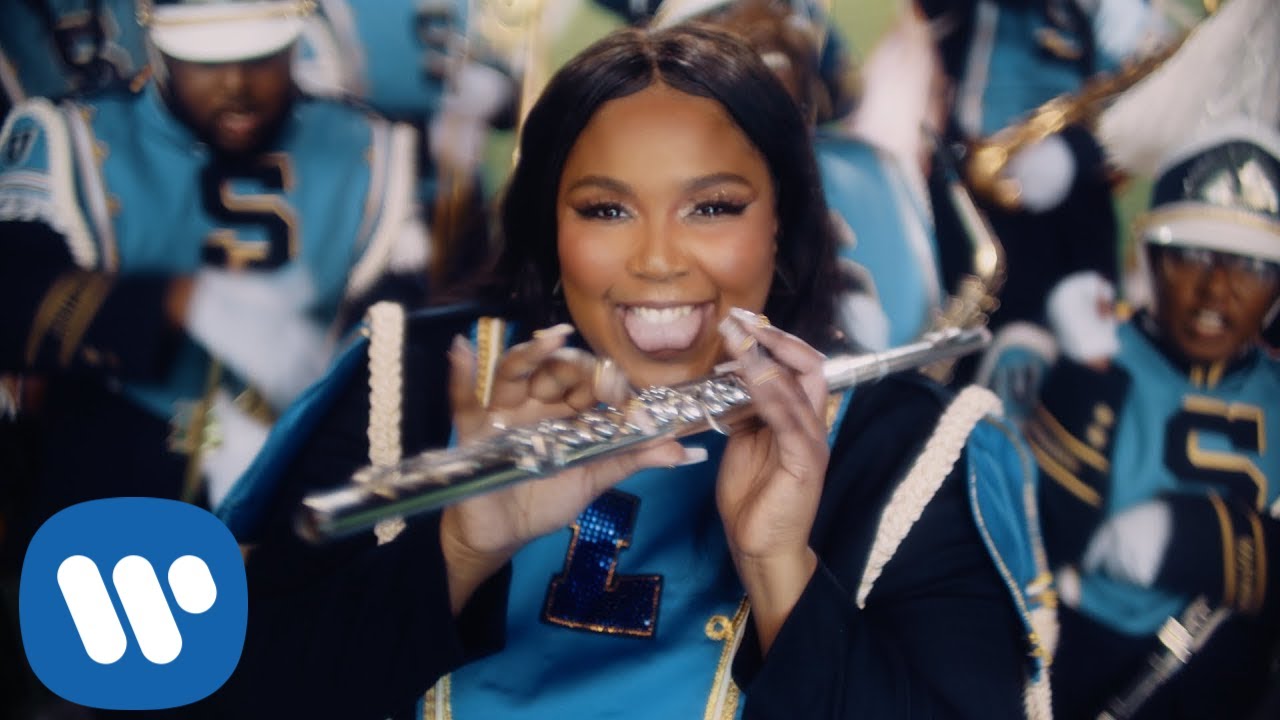
Point Lizzo’s "Good as Hell" music video utilizes the conventions of the performance-based music video genre to celebrate marching band culture and the personal background of the artist. Evidence The video is set at Southern University in Baton Rouge, featuring the "Human Jukebox" marching band and the "Fabulous Dancing Dolls" dance group. Theory This reflects the artist's own cultural background, as Lizzo previously played the flute and piccolo in a marching band, which influences the choice of settings and costumes. Analysis As the narrative progresses, the color palette shifts from students in regulation navy tracksuits to bright blue and gold costumes, with Lizzo’s gold outfit specifically connoting her "star persona" and success. Cultural Context The setting in a Historically Black College and University (HBCU) influences the representation of people and themes, grounding the video in a specific American social and historical tradition founded in 1880. Point The video blends performance with a narrative structure that follows the journeys of three female "heroes" overcoming personal conflicts. Evidence The narrative tracks Nicole (who is distracted in chemistry class), a student dealing with a romantic break-up, and another feeling isolated from her bandmates. Theory According to Vladimir Propp’s narrative theory, these students act as "heroes" who receive help from Lizzo and other female students on their journey toward self-love. Analysis Lizzo’s frequent use of direct address builds intimacy with her female audience, encouraging them to relate to the lyrics through their own personal identity. Cultural Context This narrative of female empowerment reflects contemporary social shifts and an increasing focus on body image and confidence in the age of online media. Point The representation of ethnicity in "Good as Hell" serves as a powerful message of Black empowerment and community support. Evidence The video features an entirely Black cast in an HBCU setting, representing young Black Americans as educated, talented, and supportive of one another. Theory Applying Stuart Hall’s representation theory, the "preferred reading" is for the audience to embrace the positive, feel-good message of the video. Analysis Technical codes, such as shots of students marching in formation or playing together in a hall, visually represent the theme of teamwork and harmony. Cultural Context By focusing on the marching band rather than the male footballers at the "homecoming" game, Lizzo subverts traditional cultural expectations of US university events. Point From a post-feminist perspective, the video constructs a version of femininity based on body confidence rather than the "male gaze". Evidence While the lyrics mention "hair and nails" and the "Dancing Dolls" wear revealing costumes, these are presented as tools for feeling "Good as Hell". Theory A post-feminist view argues that these feminine signifiers represent empowerment through body confidence and self-care. Analysis Women are represented as emotionally supportive of each other; for instance, it is a female teammate who helps the struggling saxophonist rather than the despairing male teacher. Cultural Context Lizzo herself acts as a role model for women who may have experienced body shaming, using her platform to promote pride in one's body. Point The video portrays men through largely negative or secondary representations to emphasize the importance of female community. Evidence Individual male characters include a "villain" boyfriend who has neglected his partner and a teacher who shakes his head at a student's mistakes. Theory This could lead to an oppositional reading (Stuart Hall) from male audience members who may feel their social group is being misrepresented. Analysis However, group shots of men and women playing together in the band represent harmony achieved through a shared goal and interest. Cultural Context The final "out-take" shot, which captures the sound of students cheering, adds a sense of realism and inclusion, reinforcing the idea of the university as a supportive community. Point The industrial success of Lizzo’s brand is a result of digital convergence and a strategic cross-platform construction of her star persona. Evidence Initially a "sleeper hit" in 2016, the song achieved mainstream success in 2019 alongside her Cuz I Love You album and her Emmy-winning Amazon reality series. Theory According to the Uses and Gratifications theory, audiences consume her content for personal identification and entertainment. Analysis Lizzo utilizes TikTok (25.3 million followers) and Instagram to take a personal approach, sharing her views on body shaming, racism, and LGBTQ+ Pride. Cultural Context Her launch of the Yitty shapewear brand (sizes XS to 6X) further aligns her commercial interests with her social message of inclusivity and body positivity. Product History: In what year was "Good as Hell" first released, and what term is used to describe its delayed success in 2019? Setting: What is the significance of Southern University in Baton Rouge regarding its status in the US education system? Media Language: How does the color palette change throughout the video to signify the students' progress? Narrative Theory: According to the source, how can the three female students be classified using Propp’s theory? Representation: Contrast the representation of the male teacher with the representation of the female teammates. Feminist Theory: Explain the difference between a traditional feminist and a post-feminist reading of the "hair and nails" lyrics. Industry: Name three platforms or media forms used to construct Lizzo’s cross-platform star persona. Audience: According to Stuart Hall, what is the "preferred reading" of the music video? Glossary of Key Terms for Lizzo Body Positivity: A social movement rooted in the belief that all human beings should have a positive body image, which Lizzo promotes. Digital Convergence: The way Lizzo's music is promoted across her website, YouTube, TikTok, and Instagram to reach a wider audience. Direct Address: When the artist looks directly into the camera to build a sense of intimacy with the viewer. HBCU (Historically Black College and University): Institutions established before 1964 with the primary mission of educating Black Americans, such as Southern University. Homecoming: A traditional US cultural event where alumni return to their university for a celebratory football game. Human Jukebox: The specific name of Southern University’s world-renowned marching band. Male Gaze: A feminist theory concept where women are represented as objects for the pleasure of a male audience; the video is argued to avoid this. Personal Identity: A "Use and Gratification" where audiences watch media to find characters they can relate to or who reflect their own lives. Post-feminism: A perspective that suggests women can find empowerment through traditional feminine activities like makeup and fashion. Preferred Reading: The message the producer intends the audience to receive (in this case, empowerment and self-love). Sleeper Hit: A song that has low initial sales but becomes a major success long after its original release. Star Persona: The public image of a celebrity that is carefully constructed across different media platforms. Symbolic Signifier: An element like Lizzo's gold costume that carries a deeper meaning of success and glamour. Yitty: Lizzo’s inclusive shapewear brand that caters to a wide range of body sizes
- Duran Duran - Deep Dive
Point: The music video for "Rio" utilizes specific technical codes to establish the "male gaze," positioning the female character as a primary object of visual pleasure. Evidence: The camera work features point-of-view (POV) shots of keyboardist Nick Rhodes looking through binoculars, combined with repetitive close-ups of Rio’s body, specifically her thighs and bottom. Theory: This aligns with Laura Mulvey’s Male Gaze theory, which suggests that women in media are often depicted as objects of visual pleasure for the male viewer. Analysis: By using slow and deliberate camera movements focused on her allure, the video initially constructs Rio as an "exotic" object of desire rather than a fully developed character. Cultural Context: This visual strategy reflects the hedonistic and glamorous ethos of the 1980s, where music videos often focused on visual spectacle and physical beauty to grab audience attention. Point: The mise en scène of the video is strategically designed to communicate a world of extreme wealth, excess, and 1980s decadence. Evidence: The video is set on a luxury yacht in the Caribbean and features props like champagne, cocktails, and phones served on silver platters, while the band members wear brightly colored designer suits. Theory: These elements function as signifiers for a "playboy" lifestyle, establishing the band members as icons of privilege and fashion. Analysis: The contrast between the exotic, tropical setting and the decadent props creates an escapist fantasy for the viewer, reinforcing the idea that the band members are well-traveled and successful. Cultural Context: This portrayal of "New Pop" luxury was perfectly suited for the early 1980s, a period marked by a cultural fascination with material wealth and glamorous lifestyles. Point: The video utilizes rapid, fragmented editing and upbeat sound to mirror the carefree and superficial nature of the 1980s "New Pop" movement. Evidence: The start of the video features a disjointed sequence of images that quickly reassemble, while the rhythmic synth-pop track provides a driving, energetic melody. Theory: From a postmodern perspective, the visual chaos and emphasis on surface-level spectacle over a deep narrative reflect the "visual culture" of the MTV era. Analysis: The fast-paced editing contrasts with the "languid" setting of the beach, creating a sense of visual indulgence that keeps the audience intellectually stimulated through movement rather than story. Cultural Context: This style was essential for the "MTV generation," who sought entertainment that was visually stimulating and provided a total experience of excitement. Point: Despite initial objectification, the video subverts traditional gender roles by granting the female character agency and control over the narrative. Evidence: Rio is shown actively rejecting the men’s advances, such as kicking a band member into the water and pulling another into the sea, ending with a knowing wink to the camera. Theory: A feminist reading suggests that while the video upholds aspects of the male gaze, it complicates the dynamic by showing Rio as an independent and empowered figure rather than a passive victim. Analysis: Her playful and defiant actions suggest she is enjoying the attention on her own terms, effectively turning the "voyeuristic gaze" of the men into a joke at their expense. Cultural Context: This shift reflects changing attitudes in the early 80s, where female characters in music videos were beginning to move beyond being mere "backdrops" to the male artists. Point: The industrial success of "Rio" was driven by the rise of MTV, which transformed the music video into an essential marketing tool for international fame. Evidence: Duran Duran invested in high production values and collaborated with professional directors to create a "polished look" that was perfectly suited for television. Theory: This demonstrates how media institutions minimize risk by using visual spectacle to sell a brand; the video helped Duran Duran set new standards for the entire industry. Analysis: By embracing the visually driven platform of MTV, the band moved beyond traditional radio play, using their fashion and "star persona" to reach a global audience. Cultural Context: The 1981 launch of MTV revolutionized the industry, making the music video just as important as the song itself for a band's commercial survival. Point: The "Rio" video targets a fashion-conscious audience by offering a combination of aspirational lifestyle and visual entertainment. Evidence: The video appeals to both male and female viewers through its mix of glamorous imagery, exotic locations, and an upbeat, catchy synth-pop sound. Theory: Using the Uses and Gratifications theory, audiences engage with the video for "diversion" and "escapism" from their everyday lives. Analysis: While male audiences might be drawn to the objectification of Rio, female audiences might appreciate her empowered portrayal as someone who can reject multiple men. Cultural Context: This dual appeal helped cement Duran Duran as icons of the 1980s, appealing to a generation that valued the intersection of music, fashion, and visual art. Media Language: How does keyboardist Nick Rhodes' use of binoculars contribute to the "male gaze" in the video? Editing: What does the rapid, fragmented editing style at the start of the video communicate about the characters' lifestyle? Mise en Scène: Name three specific props used to represent wealth and decadence in the video. Sound: How does the synth-pop track complement the visual atmosphere of the video? Theory: Which concept by Laura Mulvey is used to explain the camera’s focus on Rio’s body? Representation: Give two examples of how Rio subverts the role of a "passive object of desire." Industry: How did the launch of MTV in 1981 influence the way Duran Duran produced their music videos? Audience: Why might the female audience of the 1980s have found the character of Rio to be an appealing or "empowered" figure? -------------------------------------------------------------------------------- Glossary of Key Terms for Duran Duran's "Rio" Aspirational Lifestyle: A representation of a life (wealthy, exotic, stylish) that the audience is meant to desire or aim for. Decadence: A state of moral or cultural decline, often associated in media with excessive luxury and self-indulgence. Designer Suits: A key signifier of the "playboy" status and high-fashion identity of the band members. Escapism: The use of media (like the tropical Caribbean setting) to provide a fantasy distraction from everyday reality. Exoticism: Representing someone (like Rio) or somewhere as mysterious, different, and alluring because of their cultural or physical "otherness". Fragmented Narrative: A story told through disjointed or rapid images rather than a clear, chronological beginning, middle, and end. Male Gaze: The theory (Mulvey) that the world is represented from a masculine point of view, presenting women as objects for male pleasure. Mise en Scène: Everything put into the frame, including settings, costumes, and props, to create a specific mood or meaning. MTV Generation: The 1980s youth audience that grew up with music videos as a primary form of entertainment. Objectification: The act of treating a person (like Rio) as a physical object rather than a human being with feelings and agency. POV (Point-of-View) Shot: A camera angle that shows the audience exactly what a character is seeing through their own eyes. Subversion: Challenging or "flipping" a traditional idea; for example, Rio rejecting the men instead of being a passive victim. Synth-pop: The electronic music genre of the early 80s characterized by the use of synthesizers and a rhythmic beat. Visual Spectacle: An emphasis on glamorous and striking imagery designed to impress the audience visually. Voyeuristic Gaze: The act of looking at someone as if spying on them, often created through the use of binoculars or hidden camera angles
- Attitude - Deep Dive
30-Mark Comparative Questions In these years, Attitude was assessed alongside Zoe Sugg in a single comparative evaluation: 2024: To what extent has the internet challenged the power and dominance of large media organisations? Refer to Zoe Sugg and the Attitude website in your response. 2022: How much influence do economic factors have on online media products? Refer to Zoella/Zoe Sugg and the Attitude website in your response. 2019: Clay Shirky argues that audiences in today’s online age are no longer passive consumers of media content. Evaluate this ‘end of audience’ theory. Refer to Zoe Sugg and the Attitude website to support your answer. 15-Mark Product-Specific Questions In these years, Attitude was the sole focus of a "split" 15-mark question: 2023: Discuss the influence of social and cultural contexts on the representations on the Attitude website. 2021: Explore how the Attitude website challenges the misrepresentation of minority groups. 2020: Explore how the Attitude website targets and attracts a specialised audience. Point Attitude is published by Stream Publishing, an independent media organization that utilizes both horizontal and vertical integration to maintain a dominant position within the niche LGBTQ+ market. Evidence The company achieved horizontal integration by purchasing its main competitor, the Netherlands-based magazine Winq, and it uses vertical integration to write, edit, design, print, and distribute its own products,. Theory This business model challenges Curran and Seaton’s theory that the media is driven solely by "profit and power" in large conglomerates, as Attituderemains a relatively small, independent company with fewer than 30 employees,,. Analysis By absorbing its competition and its own production line, Stream Publishing minimizes financial risk while maintaining the creative freedom to serve a marginalized community that larger corporations might ignore,. Cultural ContextOwner Darren Styles, who is gay, bought the title specifically because he felt offering niche LGBTQ+ magazines was essential at a time when very few existed. Point The Attitude website utilizes a strategic layout and clickbait media language to maximize revenue through a "cost-per-click" advertising model. Evidence The website features a simple design with large images, white space, and small chunks of text, alongside "salacious" headlines designed to encourage clicks. Theory The design reflects stereotypical assumptions about male reading habits—specifically the idea that men are less likely to read long-form text than women—to keep the primarily male audience engaged. Analysis Every element, from the "scantily clad" male models to the high-profile celebrity interviews, is designed to drive traffic back to the site, which in turn increases revenue from banner ads and advertorials,. Cultural Context In a digital-first era, the brand targets a converged audience that spends more time on mobile phones and tablets than on traditional print products. Point Attitude targets a high-socioeconomic ABC1 gay male audience by positioning itself as an aspirational lifestyle and "opinion leader." Evidence The website features advertisements for high-end brands like Gucci and utilizes formal, complex language rather than slang or colloquialisms,. Theory This targets an educated demographic of "aspirers" and "reformers" who are interested in both looking good (metrosexuality) and social justice issues like racism and homophobia. Analysis The focus on 90s nostalgia (fashion, music, and film) specifically appeals to the 25–55 age bracket, who lived through that period and find the content comforting and relatable. Cultural Context By providing content that fills a "niche gap" in the market, the website offers its readers a sense of identity and community that is often missing from mainstream media. Point The representation of masculinity on the website both reinforces hyper-masculine stereotypes and subverts them through the inclusion of diverse gender expressions. Evidence While many images feature "topless," muscular, and "powerful" men, the site also features articles on men in drag, men who use makeup, and those who behave in a more "effeminate" way,,. Theory The frequent sexualization of men on the website is unusual for mainstream media, where women are more commonly objectified, effectively pushing the audience to view the male form through a sexual lens. Analysis This broadens the representation of gay identity, moving beyond a single "type" to include both "emotionless" factual portrayals and vulnerable accounts of the emotional impact of "coming out",. Cultural Context Most of the staff at Attitude are members of the LGBTQ+ community themselves, which explains why the representations are generally sympathetic and diverse. Point Attitude uses online technology to bypass traditional regulation and censorship, allowing it to reach global audiences in countries where LGBTQ+ content is illegal. Evidence While the print version is banned in several countries, the website remains accessible to those communities, providing them with essential stories on global LGBTQ+ issues. Theory This demonstrates how digital platforms can circumvent Livingston and Lunt’s ideas of regulation, as content can be distributed globally regardless of local national laws,. Analysis However, this global reach also brings challenges, as the site struggles to regulate homophobic or transphobic hate speech in its comment sections, leading the producers to limit "interactive" content to protect their readers,. Cultural Context To manage these risks, Stream Publishing has established its own ethics policy and uses social media algorithms to try and age-gate adult content. Point The brand actively challenges the notion of being purely profit-driven by engaging in social activism and community support through its foundation. Evidence The Attitude Magazine Foundation is a registered charity that raises funds for LGBTQ+ youth groups, pride festivals, and support organizations across the country. TheoryAccording to Hesmondhalgh, while the company minimizes risk through global editions (copying a successful format in countries like Thailand or Vietnam), it also uses its platform for social good. Analysis Events like the "Attitude Pride at Home" digital festival during the 2020 pandemic show how the brand uses technology to remain relevant to its audience's cultural and social needs. Cultural Context This "giving back" approach reinforces a loyal brand identity, proving that even in a commercial industry, a media product can serve as a powerful tool for social reform. Ownership: Who is the current Managing Publisher of Stream Publishing, and why did he originally purchase Attitude? Horizontal Integration: How did Stream Publishing "absorb the competition" within the European gay magazine market? Revenue: Aside from digital sales, name three ways the Attitude website generates revenue through advertising. Media Language: Why does the website use small chunks of text and large amounts of white space? Audience Demographics: What specific socioeconomic group is targeted by adverts for brands like Gucci? Regulation: How does the website bypass traditional censorship in countries where being part of the LGBTQ+ community is illegal?, Representation: In what way does the website’s representation of men challenge traditional gender ideologies? Industry Theory: How does the Attitude Magazine Foundation challenge Curran and Seaton’s theory of the media? Glossary of Key Terms for Attitude ABC1 Demographic: The middle-class, high-income audience that Attitude targets to attract luxury advertisers. Advertorial: An advertisement designed to look like an objective news article. Aspirers: An audience demographic (Young & Rubicam) that seeks status and is attracted to high-end, "cool" brands. Clickbait: Sensationalized or "salacious" headlines used to encourage users to click a link to generate ad revenue. Converged Technology: The blending of different media (text, video, social media) onto a single digital platform like a smartphone. Cost-Per-Click: A digital marketing model where a company pays the publisher every time a user clicks on an advert. Ethics Policy: A set of self-imposed rules that Stream Publishing follows to regulate its own content and avoid offense. Horizontal Integration: When a company buys a competitor in the same stage of production (e.g., Attitude buying Winq). Hyper-masculine: A representation that exaggerates "manly" traits, such as being extremely muscular or emotionless. Metrosexual: A man who is highly interested in fashion, grooming, and his physical appearance. Niche Market: A small, specialized part of the population that a product is aimed at, such as the LGBTQ+ community,. Opinion Leader: A person or brand (like Attitude) that has the authority to influence the audience's thoughts and spending habits. Reformers: An audience demographic that values social justice and wants to change the world for the better. Self-Regulation: When a company manages its own rules and standards to avoid outside government or legal interference. Syndicated Content: Articles or stories that are "borrowed" or bought from other global websites to provide a wider range of content. Vertical Integration: When a company owns multiple stages of its production and distribution (e.g., writing, editing, and printing its own magazine).
- Big Issue - Deep Dive
Past Paper Questions for The Big Issue (2019–2024) 2024 (30 Marks): How useful are feminist theories for analysing the representations in the set editions of Vogue and The Big Issue? Refer to at least one of the following theories in your response: van Zoonen's feminist theory or bell hooks' feminist theory. 2023 (30 Marks): To what extent can audiences interpret the same magazine in different ways? Explore the set editions of Vogue and The Big Issue in your response. 2022 (30 Marks): Evaluate the strengths and weaknesses of semiotic approaches to magazine analysis. Refer to Roland Barthes’ theory of semiotics and the set editions of Vogue and The Big Issue in your response. 2021 (30 Marks): To what extent do social and cultural contexts influence audience interpretations of magazines? Refer to the set editions of Vogue and The Big Issue to support your answer. 2020 (30 Marks): Curran and Seaton argue that media industries are generally controlled by a small number of powerful companies whose main purpose is to create a profit. Evaluate this theory of power and media industries. Refer to Vogue and The Big Issue in your response. 2019 (15 Marks): Explore how the set edition of The Big Issue conveys viewpoints and ideologies Point The Big Issue operates as an independent, not-for-profit media organization that challenges the traditional industry drive for "profit and power". Evidence Unlike large conglomerates, The Big Issue LTD is an independent company that partners with Dennis Publishing for printing and reinvests its excess revenue to support the homeless community. Theory This business model can be contrasted with David Hesmondhalgh’s cultural industries theory, as the magazine prioritizes social impact and community give-back over the standard corporate goals of vertical integration and financial maximization. Analysis By diversifying into areas like The Big Issue Foundation (providing training) and The Big Issue Invest (funding small businesses), the institution acts more as a social enterprise than a traditional commercial magazine. Cultural Context Established with a £50,000 grant from The Body Shop, the magazine was designed to be a self-sustained module that provides marginalized people with a legal way to earn an income. Point The magazine utilizes a unique "alternative" distribution model that transforms the relationship between the product, the vendor, and the audience. Evidence Street vendors, who are often homeless or in poverty, purchase copies for £1.50 and sell them for £3, keeping the profit to support themselves. Theory This reflects a move away from the conventional distribution methods used by major magazine brands that rely on retail shops and global logistics chains. Analysis This strategy fosters a personal connection between the consumer and the "inspirational" vendor, making the act of purchasing the magazine a social and political statement. Cultural Context To combat declining print sales in 2011, the magazine was relaunched with a focus on political reform and celebrity content, successfully boosting its circulation in a struggling market. Point The Big Issue represents homeless people in a realistic and sympathetic light, purposefully avoiding the "idealized" portrayals often seen in mainstream charity campaigns. Evidence The magazine uses personal stories and letters (e.g., "celebrating vendors") to represent vendors as brave and strong, while also including "gritty" details like struggles with drugs or violence. Theory This aligns with Stuart Hall’s representation theory, where the magazine creates a "realistic" version of homeless life that makes an underrepresented social group more relatable to the reader. Analysis By choosing not to "perfect" the vendors, the producers create a more authentic representation that encourages genuine understanding and sympathy from the ABC1 target audience. Cultural Context This positive representation serves the magazine's core goal of social reform, seeking to change public perception of the homeless from "victims" to "independent workers". Point The publication communicates a clear left-wing ideology that critiques established power structures and conservative political legislation. Evidence The pages frequently feature negative representations of figures like Margaret Thatcher, Donald Trump, and the Conservative government, blaming their laws for unemployment and library closures. Theory This illustrates how a media product can be a vehicle for a specific dominant ideology (in this case, social liberalism), shaping the audience's view of current political affairs. Analysis By advocating for funds to be used for libraries instead of political memorials, the magazine reinforces a "shared conceptual roadmap" that values social welfare over institutional tradition. Cultural Context The magazine's alternative status allows it to take these strong political stances, which resonate with its "liberal, alternative" readership. Point While The Big Issue often reinforces traditional masculine stereotypes through its adverts and features, it also provides a platform for counter-typical representations of gender. Evidence Many pages are dominated by "macho" imagery—such as the founders shown from a low-angle perspective or adverts for The A-Team—yet it also features "androgynous" icons like David Bowie and Grayson Perry. Theory The inclusion of Grayson Perry, who openly discusses being a "transvestite" and wears dresses, reflects Judith Butler’s theory of gender performativity by showing identity as fluid and non-binary. Analysis This creates a complex representation of masculinity that balances traditional "mental toughness" with a modern, diverse understanding of creative and feminine expression. Cultural Context This blend of "macho" and "modern" representations reflects a magazine that aims to provide positive role models for its primarily male vendor base while appealing to progressive reader values. Point The Big Issue has successfully adapted to the digital age by diversifying its reach through global distribution platforms and online retail. Evidence The magazine works with Zinio to distribute digital copies to over 174 countries, reaching audiences who lack a local vendor or prefer environmentally friendly options. Theory This demonstrates digital convergence, where an independent print product uses global technology to maintain its relevance and revenue in a declining print market. Analysis This digital expansion allows the brand to support vendors through digital sales revenue while maintaining its status as a "globally recognized brand" despite its niche roots. Cultural Context This evolution into retail (via its own online shop) and direct support (via The Big Issue Foundation) shows how a single product can expand into a multifaceted global social brand. Industrial Model: How much does a vendor pay for a single copy of The Big Issue, and for how much do they sell it to the public? Founding Support: Which famous commercial brand provided the initial £50,000 grant to help launch the magazine? Digital Strategy: Name the massive digital distribution company that The Big Issue uses to reach over 174 countries. Ideology: Does the magazine typically represent Conservative or Left-wing ideologies, and which female political leader is frequently mentioned negatively? Representation (Homelessness): Why does the magazine include "gritty" details (like drug use or violence) rather than making vendors look "perfect"? Gender (Masculinity): Which two "androgynous" celebrities are cited as examples of the magazine challenging traditional gender norms? Socio-Economic Audience: What specific socioeconomic demographic (e.g., ABC1) is the magazine targeting with its high-end adverts? Institutional Diversity: What is the purpose of "The Big Issue Invest"? Glossary of Key Terms for The Big Issue ABC1 Audience: The high-income, professional demographic that The Big Issue targets to secure high-value advertising revenue. Alternative Media: Media products that differ from the mainstream in terms of their ownership (independent), goals (not-for-profit), and content (left-wing). Counter-typical: A representation that goes against a common stereotype, such as a man wearing a dress or a homeless person described as "inspirational". Dennis Publishing: The company that The Big Issue partners with for printing services. Digital Convergence: Using online platforms (like Zinio) and online shops to reach a wider audience and adapt to the decline of print. Independent: A media company, like The Big Issue LTD, that is not owned by a larger conglomerate. Left-wing Ideology: A political stance that supports social reform, community welfare, and critiques conservative policies. Low-angle Shot: A camera angle used to make subjects (like the magazine’s founders) appear powerful and dominant. Macho Imagery: Visual codes that reinforce traditional, tough, and aggressive masculine traits. Not-For-Profit: An organization that reinvests its revenue into its social mission (helping the homeless) rather than paying out to shareholders. Pre-sold Fanbase: An audience that is already interested in a celebrity (like David Bowie) and will buy the magazine because they are featured on the cover. Social Enterprise: A business created for a social purpose, such as giving homeless people a legal way to earn money. Synergetic Merchandise: Products sold in the online shop that link back to the magazine's brand and help raise funds. The Big Issue Foundation: The branch of the organization that provides direct support, such as housing and mental health workshops, to vendors. Zinio: A global digital newsstand that allows The Big Issue to reach a worldwide audience
- Luther - Deep Dive
Point Luther utilizes specific settings and visual codes to establish a gritty, "noir" aesthetic that communicates the psychological states of its main characters. Evidence The series contrasts Zoe’s large, modern, and book-filled office—connoting her intelligence and power—with Luther’s dark, claustrophobic workplace, which lacks natural light. Theory This follows semiotic analysis, where settings function as signifiers for a character's persona; Luther's workplace signifies his "troubled" and "unstable" nature. Analysis These binary opposing locations illustrate the deep-seated problems in Zoe and Luther’s relationship, showing their different worlds through architecture and lighting. Cultural Context The urban setting and low-key lighting make intertextual references to the film noir genre, positioning Luther as a "gritty" modern update of classic detective tropes. Point The character of Alice Morgan is constructed as a modern subversion of the "femme fatale" to challenge traditional gender expectations in the crime genre. Evidence Alice is introduced with red hair and red lipstick, wearing tight-fitting suits, and she transforms from a "shaking, crying" victim into a manipulative antagonist. Theory This utilizes intertextuality, drawing on the "stock character" of the femme fatale from early 20th-century cinema—a mysterious woman who ensnares men for her own ends. Analysis By initially placing Alice in a rural, comfortable setting, the producers use enigma codes to mislead the audience into accepting her as a victim before revealing her psychopathic tendencies. Cultural Context Alice’s "intellectually superior" representation reflects a contemporary shift in the genre where female characters drive the narrative through manipulation rather than just being passive victims. Point Luther purposefully challenges racial stereotypes within British media by casting a Black man as the brilliant, high-ranking protagonist. Evidence John Luther is a high-ranking detective, while both primary villains in the first episode—Alice Morgan and Henry Madsen—are white. Theory This can be analyzed through Stuart Hall’s representation theory, as it subverts the "conceptual roadmap" where Black men are stereotypically cast as villains in police dramas. Analysis In the opening chase sequence, the audience's assumptions are challenged because, according to genre conventions, a Black man in a "hoodie-style" chase is often perceived as the criminal, not the hero. Cultural Context This representation reflects social changes in 2010 Britain regarding diversity, seeking to address the historical under-representation of ethnic minorities in leading roles. Point The series constructs a complex, non-traditional representation of masculinity by exploring the protagonist's emotional vulnerability and lack of control. Evidence Despite his physical power, Luther is shown to be "emotionally controlled" by both Alice and Zoe, and he expresses his trauma through violent gestures like punching a door. Theory Using Lévi-Strauss’ structuralism, meaning is created through the binary opposition between Luther’s aggressive masculinity and Mark’s "metrosexual" and calm demeanor. Analysis By showing a detective who "readily shows his emotions," the show challenges the "tough male" trope, presenting Luther as a flawed "anti-hero". Cultural Context This construction updates the "maverick cop" archetype from older shows like The Sweeney, reflecting a modern interest in the mental health and stability of law enforcement figures. Point As a Public Service Broadcaster (PSB), the BBC utilizes Luther to demonstrate its ability to produce high-quality, "innovative" drama that justifies the license fee. Evidence The show features high production values, cinematic cinematography, and established stars like Idris Elba, all while being broadcast in a primetime 9pm slot. Theory This reflects David Hesmondhalgh’s theory, as the BBC minimizes financial risk by using a "popular genre" (crime) while innovating through an "inverted detective" format. Analysis The BBC’s funding model allows it the relative autonomy to take risks on new formats that commercial broadcasters, driven solely by ratings, might avoid. Cultural Context By marketing the show as "Original British Drama," the BBC leverages its brand identity to compete in an increasingly fragmented global market. Point The brand targets a diverse, globally "converged" audience by offering multiple ways to consume the series across digital and social platforms. Evidence Beyond its BBC1 broadcast, the show is available on iPlayer, Amazon Prime, and Netflix, and includes interactive features like "Postcards from Alice". Theory This aligns with Blumler and Katz’s Uses and Gratifications theory, as audiences gain pleasure from "solving the crime" (information) and "social interaction" on Twitter. Analysis The "inverted detective" structure (where we see the crime happen first) places the audience in a "privileged spectator" position, offering a different intellectual pleasure than a standard "whodunnit". Cultural Context The show’s distribution in over 200 territories demonstrates how a "niche" British character can become a global "water-cooler" television event through streaming technology. Product Origin: Who created and wrote Luther, and which two classic fictional detectives inspired the character? Genre Subversion: What is an "inverted detective story," and how does it change the audience's role in the narrative? Media Language: How does the setting of Luther’s home reinforce his character's "instability" and "issues"? Semiotics: What specific iconography (clothing) becomes "synonymous" with Luther’s character throughout the series? Representation: In what way does the opening scene chase challenge stereotypical assumptions about ethnicity? Industry: Which organization is the external regulator for the BBC, and which body classifies its DVD releases? Audience: What is the specific target age range for Luther on the BBC, and why might it be different on Netflix? Technical Codes: How does the use of close-ups and shot-reverse-shot in the interview with Alice advance the narrative? Glossary of Key Terms for Luther Anti-hero: A protagonist who is flawed and does not always conform to traditional heroic expectations, like Luther letting a villain fall. Binary Opposition: A structuralist contrast between opposites used to build tension, such as Luther vs. Mark or Luther’s office vs. Zoe’s office. Cinematic Style: The use of high-quality camera work and locations to make a TV show look like a big-budget movie. Convergence: The way audiences can access the brand across different devices and platforms like iPlayer, Twitter, and Netflix. Enigma Code: A narrative mystery used to hook the audience, such as the murdered dog or Alice’s true motives. Femme Fatale: A mysterious and seductive female character (like Alice) who leads men into dangerous situations. Inverted Detective Story: A format where the audience sees the crime committed first, focusing the drama on the "cat and mouse" game rather than the mystery. Maverick: A character who does not follow the rules or conform to expectations, often used to describe Luther’s policing style. Metrosexual: A term used to describe men (like Mark) who are more interested in their appearance and have a non-aggressive demeanor. Public Service Broadcaster (PSB): A media organization (the BBC) funded by the public with a remit to inform, educate, and entertain. Shot-Reverse-Shot: A technical code where the camera switches between two characters talking, used to establish the power dynamic between Luther and Alice. Watershed: The 9pm cut-off point in UK television, after which content for adults can be shown
- Zoella - Deep Dive
Zoe Sugg (Zoella) Past Questions 2024 (30 Marks): To what extent has the internet challenged the power and dominance of large media organisations? Refer to Zoe Sugg and the Attitude website in your response. 2023 (15 Marks): Explain how media production and distribution have changed in the age of YouTube and the Internet. Refer to Zoe Sugg in your response. 2022 (30 Marks): How much influence do economic factors have on online media products? Refer to Zoella/Zoe Sugg and the Attitude website in your response. 2021 (15 Marks): Explain the impact of the internet and online platforms such as YouTube on media regulation. Refer to Zoe Sugg/Zoella in your response. 2020 (15 Marks): Explain Judith Butler’s theory of gender performativity. Use Zoe Sugg/Zoella to support your response. 2019 (30 Marks): Clay Shirky argues that audiences in today’s online age are no longer passive consumers of media content. Evaluate this ‘end of audience’ theory. Refer to Zoe Sugg and the Attitude website to support your answe Point Zoella utilizes a specific set of visual codes and a "deliberately amateurish" aesthetic to construct a hyperreal version of femininity that feels both fantastic and relatable to her audience. Evidence Her media products feature stereotypical feminine signifiers such as pastel pinks, fairy lights, and flowing fabrics, combined with cinematography that avoids high-end professional polish. Theory This can be analyzed through the lens of Jean Baudrillard’s hyperreality, where Zoella’s curated life becomes a "fantastic yet relatable" version of reality that her audience consumes as truth. Analysis The "amateur" aesthetic is a strategic choice; it suggests authenticity to a media-saturated young audience, making the creator appear more like a "friend" than a distant celebrity. Cultural Context This reflects the rise of the digital vlogger in the early 21st century, where the "vlogging lifestyle" itself is presented as an ideal and aspirational job choice. Point The brand reinforces hegemonic feminine stereotypes by centering its content on traditional female-based activities and interests. Evidence The menu bar on Zoella.co.uk explicitly directs users to categories like "BEAUTY," "FOOD," and "STYLE," while her videos foreground makeup, fashion, and shopping. Theory This aligns with Judith Butler’s theory of gender performativity, as Zoella "performs" a version of female identity that reinforces dominant ideological perspectives for her young target audience. Analysis By focusing on these specific areas, the brand creates a "shared conceptual roadmap" that suggests a woman’s primary interests should revolve around domesticity and physical appearance. Cultural Context Despite these stereotypes, she occasionally subverts them by appearing without makeup or discussing her struggles with anxiety, which enhances her relatability. Point From a postcolonial perspective, Zoella’s content can be critiqued for its lack of diversity, which potentially constructs a racial hierarchy. Evidence The sources note that her videos and blog predominantly feature white people, with very little representation of ethnic minorities. Theory This can lead to what George Gerbner calls "symbolic annihilation," where minority groups are excluded or marginalized, suggesting they are less important in the "ideal" lifestyle being presented. Analysis Because her house and social circle are presented as an "ideal youthful environment," the absence of diverse voices inadvertently normalizes white-centric beauty standards and social spaces. Cultural Context This reflects a common criticism of early mainstream YouTube culture, which often failed to reflect the cosmopolitan and diverse reality of modern Britain. Point Zoella targets a specific white, working-to-middle-class female audience through an intimate and confessional mode of address. Evidence Her videos utilize a "confessional tone" where she shares her feelings about personal problems, and she uses YouTube comments and VidCon events to allow direct audience interaction. Theory This fosters a high level of audience engagement, where users are invited to participate in her life through recipes, instructions, and community-spirit activities. Analysis By adopting a "friendly and welcoming" tone, she targets the 13–24 age bracket—and more recently an older "Zoe Sugg" audience—who seek emotional connection in their media consumption. Cultural Context Her partnerships with high-street brands like ASOS and H&M further solidify her appeal to an ABC1C2 demographic that values "on-trend" fashion at accessible prices. Point The "Zoella" brand operates as a vertically integrated organization motivated by profit and power, utilizing digital algorithms to maximize its commercial reach. Evidence Revenue is predominantly generated through advertising and click-throughs, and the site uses "autoplay" and "Read Next" buttons to maximize the time spent on her platforms. Theory This reflects David Hesmondhalgh’s cultural industries theory, where media institutions use established formats and strategic technological tools to minimize risk and ensure financial success. Analysis Even her books, while using external distributors like Hodder and Stoughton, are part of a broader commercial strategy that transforms a personality into a multi-platform industry. Cultural Context The brand has evolved from a personal blog to a massive commercial entity, leading to "oppositional readings" from critics who take exception to the highly capitalist nature of her marketing. Point As an independent creator, Zoella must navigate the complexities of self-regulation while balancing commercial interests with her role as a social advocate. Evidence While she has faced legal implications for failing to disclose paid-for content on Instagram, she has also acted as an ambassador for MIND and the National Citizen’s Service. Theory This highlights the challenges identified by Livingstone and Lunt, where traditional regulation is difficult in the digital sphere, forcing individual creators to set their own ethical standards. Analysis Her willingness to discuss panic attacks and mental health serves a social purpose, yet critics have also unearthed old Twitter posts that were seen as offensive to minority groups. Cultural Context This illustrates the dual nature of modern influencers who wield massive social power but are often caught between their authentic personal history and the "polished" requirements of global brand deals. Product Context: In what way has Zoella’s brand name shifted to reflect her move toward an older target audience? Media Language: What specific technical codes (lighting/editing style) are used to make Zoella appear "relatable and human"? Representation (Gender): Which three hyperlinks in the menu bar of her website are cited as reinforcing hegemonic stereotypes of women? Representation (Ethnicity): Why is the term "symbolic annihilation" applied to the lack of diversity in Zoella's content? Industry Strategy: How does the website maximize audience engagement and time spent on the site through technical features? Regulation: Give an example of a legal implication Zoella faced regarding her social media marketing. Social Context: Zoella has been an ambassador for which mental health charity, and why is this significant for her brand? Audience Demographics: Which socioeconomic groups are targeted by her partnerships with brands like ASOS and H&M? Glossary of Key Terms for Zoella Amateur Aesthetic: A deliberate style of filming and editing that looks "home-made" to signify authenticity and relatability. Aspirant Tribe: An audience group that is "on-trend" and constantly chases the latest fashions and material possessions. Confessional Tone: An intimate style of address where a creator shares personal feelings and vulnerabilities to connect with fans. Digital Convergence: The use of multiple platforms (Instagram, YouTube, Blog) to create a unified brand experience. Gender Performativity: The idea (Butler) that identity is constructed through repeated actions that align with societal expectations of "male" or "female". Hegemonic Representation: A portrayal that supports the dominant or "traditional" views of society, such as women being primarily interested in beauty. Hyperreality: A state (Baudrillard) where a "fantastic" or curated version of life is consumed as if it were better or more real than everyday life. Indie and Vertically Integrated: An organization that is independent but manages its own production and marketing. Mode of Address: The way a media product "speaks" to its audience; Zoella uses a "friendly and welcoming" tone. Postcolonial Reading: An analysis focusing on how media might marginalize non-white ethnicities or reinforce racial hierarchies. Self-Regulation: The process where a creator or company sets its own ethical rules, often to avoid legal trouble or public backlash. Symbolic Annihilation: When a group (like ethnic minorities) is not represented at all in the media, effectively making them "invisible". Target Audience: The specific group a product is for; Zoella targets white, heterosexual, working-class females aged 13–24. VidCon: A major fan event where audiences can directly interact with their favorite online creators
- Vogue - Deep Dive
Past Examination Questions (2019–2024) 2024 (30 Marks): How useful are feminist theories for analysing the representations in the set editions of Vogue and The Big Issue? Refer to at least one of the following theories in your response: van Zoonen's feminist theory or bell hooks' feminist theory,. 2023 (30 Marks): To what extent can audiences interpret the same magazine in different ways? Explore the set editions of Vogue and The Big Issue in your response,. 2022 (30 Marks): Evaluate the strengths and weaknesses of semiotic approaches to magazine analysis. Refer to Roland Barthes’ theory of semiotics and the set editions of Vogue and The Big Issue in your response,. 2021 (30 Marks): To what extent do social and cultural contexts influence audience interpretations of magazines? Refer to the set editions of Vogue and The Big Issue to support your answer,. 2020 (30 Marks): Curran and Seaton argue that media industries are generally controlled by a small number of powerful companies whose main purpose is to create a profit. Evaluate this theory of power and media industries. Refer to Vogue and The Big Issue in your response,. 2019 (15 Marks): Discuss the influence of historical context on representations in the set edition of Vogue magazine. Point The success of Vogue magazine as a global brand is driven by its publisher, Condé Nast, which balances calculated risk-taking with the replication of successful formats to maximize profit. Evidence Condé Nast is a large global company that produces a wide range of printed magazines and has launched numerous international versions of Vogue. Theory This reflects David Hesmondhalgh’s cultural industries theory, which suggests that powerful companies often minimize risk by replicating successful formats while also taking strategic risks, such as Vogue’s early adoption of expensive color photography in the 1930s. Analysis By operating as a large conglomerate, Condé Nast can afford to "nurture amazing new talent" while maintaining an image of exclusivity and luxury that draws in a global audience. Cultural Context Throughout the early 20th century, Vogue thrived by providing an aspirational lifestyle that audiences dreamed of having, even during wartime, solidifying its status as a leading fashion authority. Point The magazine utilizes high-quality advertising and an "authoritative" tone to position itself as a vital opinion leader for its target demographic. Evidence Readers often embrace the high volume of advertisements in Vogue because they see the magazine as providing ideas for a specific, desirable lifestyle. Theory This can be analyzed through the concept of opinion leadership, where the magazine's reputation for fashion knowledge makes its commercial endorsements feel like expert advice rather than mere sales pitches. Analysis The high cost of advertising—£36,000 for a full page—demonstrates the industry's belief in the magazine's power to influence the spending habits of wealthy consumers. Cultural Context In the post-war period, Vogue capitalized on a surge in consumerism and the new cultural emphasis on "treating yourself," which allowed it to maintain high circulation even when other magazines suffered. Point Vogue occasionally challenged contemporary 1960s gender norms by representing women as financially independent, reflecting the early influence of second-wave feminism. Evidence The magazine featured articles by experts like Sheila Black from the Financial Times, who discussed women wanting to invest money and achieve financial independence. Theory This representation of female power challenges the historical context where women were often financially controlled by their husbands, suggesting a shift in gendered power dynamics. Analysis However, the inclusion of basic financial definitions in such articles suggests a lingering assumption that women were still "reliant on their husbands" and new to the world of economics. Cultural Context These progressive articles appeared during an influx of second-wave feminism, catering to an AB socioeconomic demographic that was beginning to seek autonomy outside of domestic life. Point Despite some progressive elements, the magazine largely reinforced traditional 1960s gender stereotypes by depicting women in passive, domestic, or sexualized roles. Evidence Adverts for brands like Imperial Leather show women as "caring and loving" in domestic settings, while Cutex and Revlon adverts describe women as "alluring," "beguiling," and "sexualized". Theory This aligns with Liesbet van Zoonen’s ideas (implied by the source) that women’s bodies are often represented as objects to be looked at, where femininity is linked to physical appeal and "nakedness". Analysis The "passivity" of women in many fashion pages, where they are seen "lounging around" or nurturing children, fails to reflect the growing power of feminists during that decade. Cultural Context These representations were standard for the 1960s mainstream market, where women were typically expected to marry young and prioritize family life over independent careers. Point The publication constructs a highly elitist and "utopian" version of reality tailored specifically to the interests and lexis of the middle-to-upper classes. Evidence Vogue uses "complex language" and "advanced lexis" while featuring articles that discuss lords, ladies, and high-end artworks. Theory This creates a "shared conceptual roadmap" (Stuart Hall) of high status, where upper-class people are featured as idealised, aspirational role models for the reader. Analysis By focusing on formal costumes, luxury conferences, and even a "Vogue café," the brand extends its high-end vision into a total lifestyle for its wealthy audience. Cultural Context The target audience’s high socioeconomic status allowed Vogue to remain profitable even with expensive production costs, as its readers could afford the luxury goods being advertised. Point Representations of ethnicity in the 1965 issue reflect a post-colonial worldview where white identity is normalized and minority groups are marginalized or "othered." Evidence The cover features Sophia Loren in a way that makes her seem "exotic," while Black Egyptian men are placed in the background of fashion shots, out of focus and seen as "staff". Theory This reflects Stuart Hall’s theories on "otherness," where ethnic minorities are represented as different from the white "norm" and are frequently marginalized in the narrative. Analysis The lack of inclusive makeup shades—with "nude" tones aimed only at lighter skin—further reinforces the idea that darker ethnicities were underrepresented and less valued by the fashion industry at the time. Cultural Context This marginalisation mirrors the less inclusive nature of Britain in the 1960s, where Western professional standards were equated with white identity. Ownership: Which global company creates and publishes Vogue, and in what year did they launch the UK version? Industry Theory: How does Vogue’s use of international versions reflect David Hesmondhalgh’s ideas about powerful media companies? Advertising: Why do Vogue readers often "embrace" the advertisements in the magazine rather than finding them off-putting? Cover Representation: How does the close-up image of Sophia Loren on the 1965 cover signify her importance and "exotic" status? Subversive Gender Roles: Who was Sheila Black, and why was her presence in the magazine unusual for the 1960s? Stereotypes: How does the Imperial Leather advert reinforce traditional maternal stereotypes of women? Class Context: Which specific socioeconomic groups (using the AB scale) does Vogue primarily target with its "advanced lexis"? Post-Colonialism: In what way are Black Egyptian men represented in the fashion pages to suggest they are "less important" than white models? Glossary of Key Terms AB Socioeconomic Groups: A classification for the highest-earning members of society (professional and managerial classes) who are Vogue's primary audience. Aspirational: A brand image designed to make the audience desire a higher social status or a more luxurious lifestyle. Condé Nast: The large global media conglomerate that owns and publishes Vogue. Consumerism: The cultural emphasis on purchasing goods and "treating yourself," which boomed in the post-war era. Domesticity: A representation that focuses on women within the home, often as mothers or caregivers. Exclusivity: The sense that a product is high-end and limited to a select group of people, often achieved through collaborations with famous artists. Lexis: The specific vocabulary used in a text; Vogue uses an "advanced lexis" to appeal to educated, upper-class readers. Marginalization: Representing a group (like ethnic minorities) as less important or "in the background" of the main story. Opinion Leader: An individual or publication that has the power to influence the opinions and purchasing decisions of others. Othering: A theoretical concept where a specific group is represented as "exotic" or fundamentally different from the social "norm." Passivity: A state of being inactive or submissive; often used to describe how women were represented in 1960s fashion spreads. Post-Colonial View: A perspective that reflects the power structures of former colonial empires, often placing Western/white identity at the top of a social hierarchy. Second-Wave Feminism: The movement in the 1960s and 70s that campaigned for women's legal and social equality, including financial independence. Sexualized Representation: When a character (usually female) is portrayed primarily for their physical appeal or to attract the "male gaze." Utopia: An idealized, perfect version of reality, used in Vogue to represent the lives of the upper classes
- Deep Dive - Peaky Blinders
2024: Explore how the set episode of Peaky Blinders reinforces or challenges genre conventions. 2023: How useful are structuralist theories for exploring television products? Refer to Lévi-Strauss's structuralist theory of binary oppositions and the set episodes of Peaky Blinders and The Bridge in your response. 2022: Explain Henry Jenkins' theory of fandom, referring to Peaky Blinders to support your response. 2021: Evaluate Steve Neale's theory of genre (repetition, difference, variation, and change) using the set episodes of Peaky Blinders and The Bridge to support your answer. 2020: Discuss how evident it is that television products are significantly influenced by the contexts in which they are produced, using Peaky Blinders and The Bridge as examples. 2019: To what extent do Peaky Blinders and The Bridge support the claim that television is a global industry Point Peaky Blinders is a complex hybrid-genre production that utilizes the conventions of the gangster, Western, and historical drama genres to "mythologize" the British working class. Evidence The opening sequence features Tommy Shelby riding a horse through the industrial streets of Small Heath, mimicking Western iconography of a "tall man on a horse" arriving in a town where people dash to hide. Theory This aligns with Steve Neale’s genre theory, which suggests that genres must balance "familiar tropes" (like gangster violence) with "fresh elements" (like the 1920s Birmingham setting) to evolve and remain successful. Analysis By borrowing the "heroic" visual language of the American Western, creator Steven Knight elevates the status of his working-class characters, transforming them from simple criminals into iconic folk heroes. Cultural Context The show intentionally serves as an "anti-Downton Abbey," seeking to reveal the "secret history" of England by focusing on the lives of those often ignored in traditional, upper-class period dramas. Point The series constructs a multi-layered representation of masculinity that subverts traditional "tough guy" stereotypes through the exploration of trauma and vulnerability. Evidence The protagonist, Tommy Shelby, is a "man of few words" who uses intelligence and "cunning" alongside brutal violence, with a backstory of PTSD following the First World War. Theory According to Stuart Hall’s representation theory, these meanings are communicated through "gesture and expression," where Tommy’s "under-stated" and "static" performance signifies a man suffering from psychological scarring. Analysis By rooting the characters' "machismo" and lack of fear in their wartime experiences, the producers add a layer of vulnerability that encourages audience empathy for an otherwise brutal antihero. Cultural Context This reflects the post-WWI social context, focusing on the "men who have forgotten about physical consequences" and the lasting impact of the war on the working-class community. Point Peaky Blinders features strong, empowered female characters who challenge the typical "gangster’s moll" stereotypes common in the crime genre. Evidence The narrative introduces Aunt Polly as a powerful matriarch, Ada as a rebellious daughter, and Grace as a cunning undercover agent who uses a "pretty" disguise to gather intelligence. Theory This can be viewed through Judith Butler’s theory of gender performativity, which suggests that characters like Grace "perform" a specific version of femininity (through soft singing and innocent clothing) to hide their true, ruthless nature. Analysis These portrayals illustrate a burst of female independence, where women are shown "taking over" the running of businesses and families, reflecting their increased social status after the war. Cultural Context The inclusion of diverse female narrative arcs adds "richness and complexity" to the show, ensuring it appeals to a modern audience with feminist values. Point The use of anachronistic media language, particularly in its audio codes, creates a modern "feel" that differentiates the show from other historical dramas. Evidence The soundtrack features punk and rock music—such as Nick Cave and the Bad Seeds—released decades after the 1920s, which is combined with industrial production design full of fire and "vigour". Theory This utilizes Roland Barthes’ semiotics, where the "angry but energetic" music functions as a signifier for the modern emotions and aspirations of the characters despite their period setting. Analysis This stylistic choice emphasizes the characters' "modern emotions" and simmering rage, creating a distinctly "hellish" and exciting aesthetic that sets it apart from "sanitised" versions of history. Cultural Context This aesthetic evolution was necessary to sustain the genre's appeal, offering a "spectacular and lush" production that has significantly impacted mainstream fashion. Point The industrial success of Peaky Blinders demonstrates the power of a Public Service Broadcaster to launch "local stories" onto a global stage through digital convergence. Evidence Originally broadcast on BBC Two, the show moved to a primetime slot on BBC One before being purchased by Netflix, which distributed it to over 200 million subscribers worldwide. Theory This reflects David Hesmondhalgh’s cultural industries theory, where media institutions minimize risk by investing in "familiar products" (like the gangster genre) and established "showrunners" like Steven Knight. Analysis While the BBC is not constrained by a commercial model, the show's global reach on Netflix shows how "niche" British culture can achieve massive commercial success in non-English speaking territories. Cultural Context The show’s popularity on streaming platforms (garnering 45.71 million hours of playing time in one week) illustrates how viewing habits have shifted away from scheduled television. Point Peaky Blinders has fostered a powerful global fandom that has successfully reversed the "cultural cringe" associated with its Birmingham setting. Evidence Fans participate in "textual poaching" by creating cosplay, fanart, and fanfiction, while thousands attend Peaky Blinders-themed festivals and museum tours in the Midlands. Theory Henry Jenkins’ fandom theory suggests that audiences have a creative relationship with the product, "appropriating" its style—such as the flat caps and suits—to build their own identities. Analysis This "cottage industry" of unofficial products provides fans with an extended experience beyond the screen, transforming a TV show into a broader cultural movement. Cultural Context The resulting "cultural Renaissance" in Birmingham has replaced local embarrassment with civic pride, proving that media representations can have a profound impact on real-world communities. Product Context: In what year did Peaky Blinders first air, and which two UK production companies were responsible for its creation? Genre Hybridity: According to the factsheet, which three genres are combined to make Peaky Blinders a "hybrid-genre" drama? Media Language: How is Western iconography used in the opening sequence of Episode 1 to establish Tommy Shelby’s reputation? Narratology: How does the show play with Todorov’s narrative structure regarding the roles of the protagonist and antagonist? Representation of Masculinity: How does the show use the theme of PTSD to add a layer of "vulnerability" to its gangster characters? Gender Performativity: Applying Judith Butler’s theory, how does the character of Grace "perform" a specific version of femininity? Industry Strategy: Why was the purchase of the show by Netflix in 2014 a turning point for its global audience reach? Audience Fandom: According to Henry Jenkins, what is "textual poaching", and how have Peaky Blinders fans demonstrated this? Glossary of Key Terms for Peaky Blinders Anachronistic Music: The use of modern music (like punk or rock) in a historical setting to create a specific mood. Antihero: A protagonist who lacks traditional heroic qualities, such as Tommy Shelby, who uses both cunning and violence. Binary Opposition: A structuralist contrast between two opposing forces, such as the criminal Shelbys vs. the lawmaker Campbell. Cottage Industry: Unofficial or "satellite" products (like theme pubs or tours) created by fans or local businesses around a media brand. Cultural Cringe: A sense of local embarrassment or lack of pride in one’s identity or location, which Steven Knight sought to reverse. Digital Convergence: The coming together of different media platforms, such as a BBC TV show becoming a global success on Netflix. Enigma Codes: Narrative hooks or mysteries used in long-form drama to keep the audience curious and engaged. Equilibrium: The state of "normality" at the start of a story (Todorov), which in Peaky Blinders is quickly disrupted. Hybrid Genre: A media product that blends conventions from multiple genres, such as the "Gangster-Western-Historical" mix here. Intertextuality: When a media text references other texts, such as Peaky Blinders referencing The Godfather or The Untouchables. Matriarch: A female figure of authority within a family or organisation, such as Aunt Polly. Mythologizing: The process of turning ordinary people or events into legendary or "heroic" stories. Prosumer: A consumer who also produces media, such as fans who create TikTok videos or fanfiction based on the show. PTSD (Post-Traumatic Stress Disorder): A mental health condition used in the show to explain the characters' emotional detachment and violence. Secret History: Stories focusing on the marginalized groups (working class, women, etc.) rather than the wealthy elites usually seen in history. Showrunner: The person with primary creative control and responsibility for a TV series, in this case, Steven Knight. Textual Poaching: Henry Jenkins’ term for fans "borrowing" elements from a media text to create their own cultural products. Unique Selling Point (USP): A specific feature (like the "flat caps" or "Birmingham setting") that makes a product stand out from competitors.
- Predictions for Component One
Based on the examination materials from 2019 to 2025, here is a comprehensive statistical analysis and trend report for Component 1, followed by a theoretical exam paper for 2026. 1. Topic Frequency Analysis (2019–2025) The examination consistently divides content into Section A (Media Language/Representation) and Section B (Industries/Audiences). Section A: Media Language (15 Marks): Music Videos: The most frequent recently, appearing in 2025, 2024, and 2022. Newspapers: Appeared in 2024 and 2020. Advertisements: Appeared in 2023 and 2019. Film Posters: Appeared in 2021. Section A: Representation (30 Marks): Gender: The dominant theme, appearing in 2025, 2022, and 2021. Social Groups/Identity: Appeared in 2024 (positioning audiences) and 2020. Values and Beliefs: Appeared in 2023. Versions of Reality: Appeared in 2019. Media forms: 2019: Newspapers 2020: Advertisement and Music Video 2022: Film Posters 2023: Advertisement and Music Video 2024: Music Video 2025: Film Posters Section B: Media Industries: Newspapers: Features in 100% of papers, alternating between The Times and Daily Mirror for long-form answers. Film Industry: Features in roughly 67% of papers, focusing on Black Panther and I, Daniel Blake. Video Games: Appears every 2–3 years (e.g., 2025, 2023, 2020) focusing on the Assassin’s Creed franchise. Section B: Media Audiences: Advertising: Focused on Super.Human (or similar ads) in 2025, 2024, and 2022. Radio: Regularly features to test technological impact and specialized audiences. 2. Question Types, Command Words, and Recurring Phrases The exam uses a specific hierarchy of command words and marks: Command Words: "Explore how..." (15 marks): Requires technical analysis of codes and conventions in an unseen resource. "Compare how far..." (30 marks): Requires an extended response, making judgments and drawing conclusions. "Explain how..." (8–12 marks): Requires application of a theoretical framework or context to a set product. "Briefly explain/Name" (1–2 marks): Testing recall of industry terms like "diversification," "vertical integration," or "distribution". Recurring Phrases: "Reflect social and cultural contexts" (appears in every 30-mark question). "Uses codes and conventions to communicate meaning". "Draw together knowledge and understanding from across your full course of study" (specific to synoptic industry/context questions). 3. Detailed Overview of 30-Mark Responses The 30-mark comparison is the most critical element of Section A. Required Elements: Candidates must consider similarities and differences, the use of stereotypes (challenging or reinforcing), and the influence of media contexts. The "Context" Mandate: You are always asked to judge how far representations reflect the era or society in which they were produced (e.g., historical context for Kiss of the Vampire vs. contemporary context for Jakob's Wife). 4. 2026 Predictions Section A (15m): Shift away from music videos (used two years running) toward a Newspaper Front Page or Print Advertisement analysis. Section A (30m): Likely to focus on Social Groups or Identity, potentially comparing Super.Human with an unseen charity poster or film resource. Section B (Industry): A focus on Ownership or Regulation in the film industry is overdue. Section B (Audience): Radio 4 Woman’s Hour is a high-probability topic for exploring how traditional media adapts to digital technology to reach audiences. 5. Theoretical Exam Paper: 2026 (Component 1) Section A: Analysing Media Language and Representation (45 Marks) Q1 (15 marks): Explore how media language is used to communicate meaning in the provided unseen Newspaper Front Page. Q2 (30 marks): Compare how representations of social groups are used in the Super.Human advertisement and the unseen Charity Poster. In your answer you must: consider similarities and differences, judge how far representations reflect social and cultural contexts, and draw conclusions. Section B: Understanding Media Industries and Audiences (45 Marks) Q3.1 (2 marks): Briefly explain what is meant by vertical integration in the film industry. Q3.2 (2 marks): Identify one function of the BBFC. Q3.3 (10 marks): Explain how economic contexts shape the production of independent films. Refer to I, Daniel Blake to support your points. Q3.4 (12 marks): Explain how the newspaper industry reflects political contexts. Refer to the Daily Mirror to support your points. (Synoptic Question) Q4.1 (12 marks): Explain how public service broadcasters reach specialized audiences through different technologies and platforms. Refer to Radio 4 Woman’s Hour to support your points. Q4.2 (7 marks): Explain how audiences may decode advertisements in different ways. Refer to Hall’s reception theory and the Super. Human. advertisement