
Back to the Future: How the Film Depicts the 1950s

Back to the Future: How the Film Depicts the 1950s
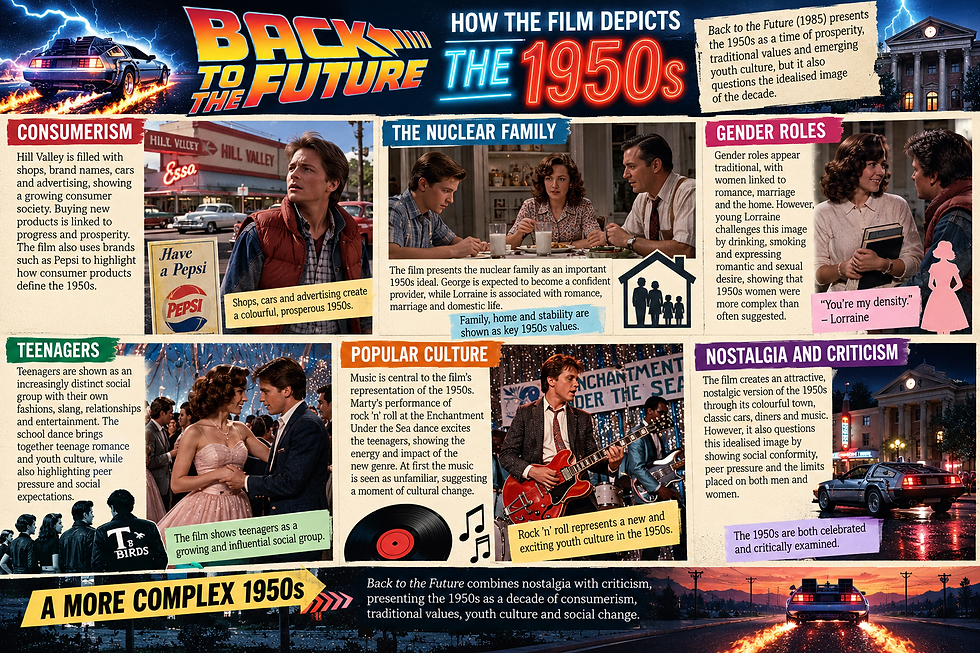
Back to the Future (1985) presents the 1950s as a period of prosperity, traditional values and rapidly developing popular culture, but it also questions the idealised image of the decade. When Marty McFly travels from 1985 to 1955, the differences between the two periods allow the audience to compare American society across generations.
Consumerism is central to the film’s representation of the 1950s. Hill Valley is filled with recognisable products, shops, cars and advertising. The town square presents a colourful consumer society in which buying new products is associated with progress and prosperity. The film also makes jokes about brands, particularly Pepsi, demonstrating how consumer products help define different historical periods.
The film presents the nuclear family as an important 1950s ideal. George is expected to become a confident husband and provider, while Lorraine is associated more strongly with romance, marriage and domestic life. Gender roles therefore appear relatively traditional. However, the film complicates this representation through Lorraine. Marty expects his mother to have been innocent and conservative as a teenager, but discovers that she drinks, smokes and expresses romantic and sexual desire.
Teenagers are shown as an increasingly distinct social group. They have their own fashions, slang, relationships and entertainment. The school dance becomes particularly important because it brings together teenage romance and emerging youth culture.
Popular culture is most clearly represented through music. Marty performs rock ’n’ roll at the Enchantment Under the Sea dance, where his energetic guitar playing initially excites the teenagers before becoming too unfamiliar for them. The scene humorously presents the 1950s as a moment of cultural change.
Overall, the film combines nostalgia with criticism. Its colourful diners, cars and music create an attractive version of 1950s America, while its treatment of gender, family expectations and social conformity suggests that the decade was more complicated than its nostalgic image implies.
Questions
How does Hill Valley represent growing consumerism in 1950s America?
What products, brands or advertisements help establish the 1955 setting?
How does the film represent the ideal of the nuclear family?
What expectations of masculinity are placed on George McFly?
How does young Lorraine challenge Marty’s assumptions about 1950s women?
How are teenagers presented as a distinct social group?
Why is the Enchantment Under the Sea dance important to the film’s representation of popular culture?
To what extent does Back to the Future celebrate or challenge nostalgia for the 1950s?


Comments